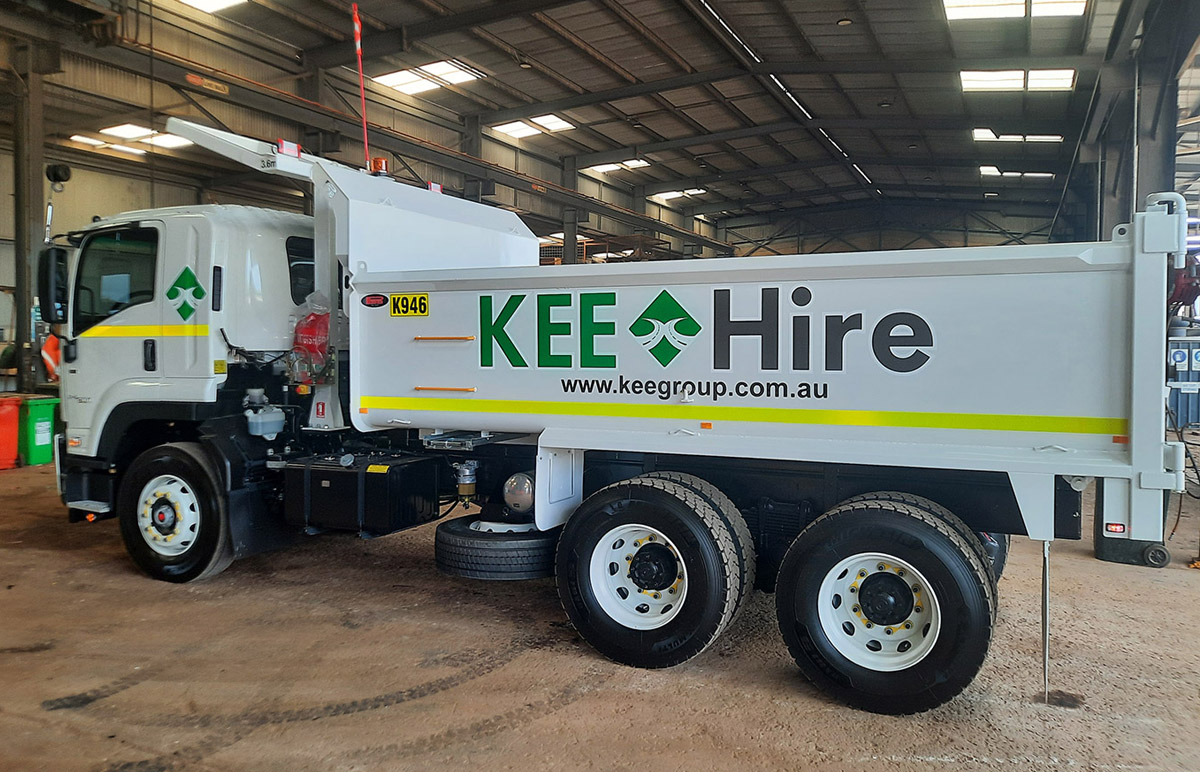
Tipper Hire or Dump Trucks: Which Suits WA Projects?
Choosing between tipper hire and dump trucks comes down to one practical question: how will your material move from loading point to discharge point, safely and often enough to keep the job on schedule? Both truck types have a clear place on civil, mining and resources projects, but the right fit depends on your route, material, access and daily production goals.
At KEE Group, we look at the full haulage cycle with you, not just the tonnes that need moving. Loading times, fuel use, road conditions, safe tipping areas and downtime all affect whether a fleet is helping the job move ahead or holding it back.
Move Material Faster with the Right Haulage Fleet
No two commercial projects handle material in quite the same way. A road construction crew may need road base delivered from an external supplier, while a bulk earthworks team may need to move spoil repeatedly across an active site. Using one truck type for every task can create unnecessary delays, waiting time and access issues.
Our KEE Hire team supplies modern machinery for commercial, infrastructure, mining and resources work. When a project also needs coordinated support, our wider services across hire, surfacing, transport and bulk fuel delivery can help bring key parts of the operation together.
Late November is a sensible time to lock in fleet plans before summer work programs gather pace. Heat, dust and remote-site access can all affect daily operations across Western Australia, while early wet-season conditions in northern areas can change ground conditions and site access. Planning ahead gives you more time to match equipment to the work instead of making last-minute compromises.
Match Equipment to Your Material and Route
The first choice is usually about where the material is travelling. Tipper trucks are commonly suited to material that needs to travel between separate locations using approved, road-accessible routes. Dump trucks are generally better for repeated internal haul cycles over unsealed ground, purpose-built haul roads and uneven site conditions.
Before selecting a truck, we recommend reviewing the entire material movement cycle:
- What material is being moved, such as sand, gravel, road base, crushed rock, clay or spoil?
- How far is it travelling between loading and discharge points?
- Will the truck need to use public roads, shared access roads or only internal site tracks?
- Are there tight turns, gradients, traffic controls or restricted unloading areas?
- Which machine will load the truck, and how quickly can it do so?
Material type matters because loads behave differently. Wet clay can be heavy and difficult to release, while abrasive crushed rock may affect body and loading considerations. Oversized material can also affect stability, payload planning and the way a truck is loaded.
Route conditions matter just as much. A truck may have enough capacity on paper, but it still needs to turn safely, travel over the ground available and tip within a suitable area. The strongest option is the one that completes the most safe, productive cycles in a shift while meeting your access, compliance and scheduling needs.
When Tipper Hire Makes Sense
Tipper hire is often a practical choice when material needs to move between suppliers, stockpiles, quarries, construction sites and disposal locations. These trucks can support changing work fronts where deliveries and removals need to happen throughout the day rather than along one fixed internal haul route.
For civil and infrastructure work, tippers can help bring aggregate, sand or road base to site, remove spoil, and keep crews supplied as construction stages change. They are particularly useful where material must move beyond the project boundary and travel on established roads.
Getting the best result from tipper hire starts with sound planning. We work with project teams to consider payload capacity against material density, loading equipment, legal route requirements, delivery windows and unloading access. A truck that is too small may lead to extra trips, while one that does not suit the loading setup can leave plant and operators waiting.
Safe unloading deserves the same attention as loading. The tipping area needs stable ground, clear overhead space, enough room to position the truck and a planned exclusion zone. Good communication between operators, supervisors and traffic controllers helps avoid rushed decisions when several activities are happening nearby.
Where Dump Trucks Perform Best
Dump trucks are built for high-volume material movement within demanding project environments. We commonly consider them for mining work, borrow pits, quarry operations, major earthworks and large civil projects where material is moved repeatedly along internal haul routes.
Articulated dump trucks can be a strong fit where ground conditions vary and manoeuvrability is needed. Their design can suit uneven surfaces, softer ground and changing site tracks. Larger rigid dump trucks are often better suited to high-production work with consistent loading cycles and well-maintained haul roads.
Dump trucks can perform well where the project includes:
- Long internal haul routes between excavation and stockpile areas
- Soft, uneven or rough ground that does not suit road-going trucks
- Steeper grades and large earthmoving zones
- High daily volumes of material moved across one site
- Regular loading from excavators or wheel loaders in a set cycle
Matching the dump truck to the loading machine is a major part of fleet planning. If the excavator or loader is too small, the truck may spend too much time waiting. If the truck is too small for the production target, loading equipment may be left idle between cycles. The aim is a steady flow of material, with minimal waiting at the load point and discharge point.
Haul road condition also shapes performance. During the warmer, drier months, dust control, visibility and road maintenance need regular attention. Uneven running surfaces, loose material and poor drainage can slow cycles and affect operator comfort, load stability and equipment availability.
Plan Fleet Capacity Around Site Conditions
For remote mining and civil work, fleet planning goes beyond selecting a truck. Mobilisation, maintenance support, operator access, fuel availability and the condition of internal roads all need to fit the project plan. In Perth, regional WA, including Port Hedland, and Darwin, we support business-to-business projects with plant hire suited to commercial, mining and resources operations.
A mixed fleet often makes more sense than choosing between tippers and dump trucks as though only one can be used. Excavators or loaders may handle the loading work, dump trucks can move bulk material within the site, and tippers can manage external deliveries or spoil removal. Giving each machine the task it handles best can reduce congestion and keep work fronts moving.
Secure the Right Fleet for the Work Ahead
The best choice depends on the material, the route and the production target. Tippers are usually suited to flexible, road-accessible transport between locations, while dump trucks are generally better for heavy internal hauling across rough ground and repeat site cycles.
Before summer schedules, holiday periods and remote access conditions place extra pressure on availability, review expected volumes, loading arrangements, haul distances and safe discharge areas. A clear fleet plan helps your team select equipment that fits the work from the first load through to final placement.
Match Haulage Capacity to Project Demand
KEE Group can help you secure tipper hire suited to your material volumes, site access and haul requirements. Our team works with mining and resource companies to support practical fleet decisions across demanding operations. For availability or project-specific hire advice, contact us to discuss your requirements.