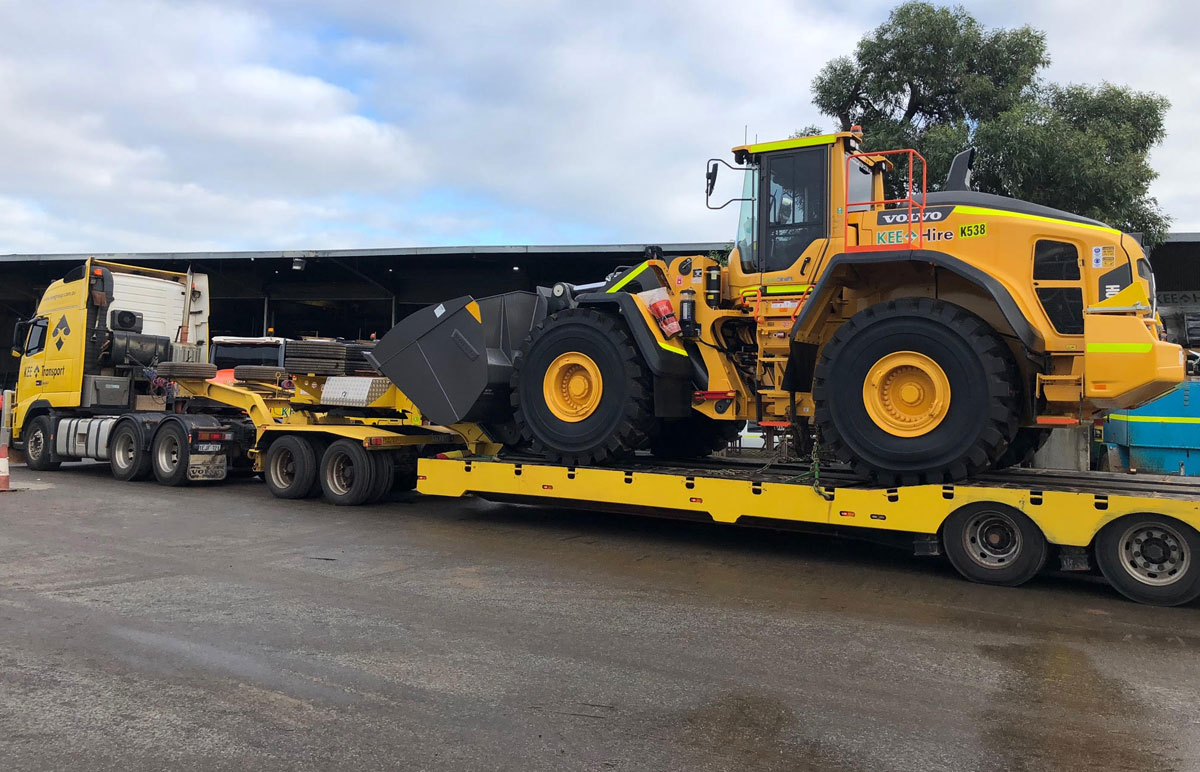
Choose The Right Loader For Load-And-Carry Work
A wheel loader and an excavator can both move material, but they do not do the same job in the same way. Choosing the right machine affects cycle times, traffic flow, operator movement and how smoothly material travels across your site.
For civil, mining, resources and infrastructure teams, the best choice comes down to the task in front of you. At KEE Hire, we support Perth and Western Australian projects with well-maintained heavy machinery and practical project support, helping you match plant to the material, ground conditions and schedule.
Choose the Right Machine for Every Load-and-Carry Cycle
Wheel loader hire in Perth is often a strong fit when you need to keep stockpiles moving, load road trucks, feed crushing equipment or clear prepared work areas. A loader is built for repeatable scoop, carry and load cycles across short distances.
Excavators are different. Their strength is digging, reaching, trenching and loading material straight from a cut, trench or pit. When the job starts below ground level, needs careful trimming or involves uneven ground, an excavator often gives the operator better control.
Before selecting plant, we recommend looking closely at:
- The type and condition of material being moved
- The distance between the material source and loading point
- Required loading height and truck body size
- Expected cycle frequency and production periods
- Ground conditions, access and site traffic controls
Neither machine is automatically “better”. The productive choice is the one that suits the whole material-handling cycle, not just one part of it.
Wheel Loaders Keep Stockpiles and Trucks Moving
Wheel loaders are purpose-built for fast work on prepared sites. With a front-mounted bucket, articulated steering and strong breakout force, they are well suited to bulk materials such as gravel, sand, crushed rock, road base and quarry products.
Where material is already stockpiled at ground level, a loader can scoop it, carry it a short distance and place it where it is needed without constant repositioning. That can keep production flowing between storage areas, hoppers, blending locations and dispatch zones.
Truck loading is another common loader task. Good mobility and operator visibility can support efficient movement around stockpiles and loading areas, as long as the site has clear traffic plans, exclusion zones and safe loading procedures in place. The loader’s bucket capacity, lift height and the truck body size should be considered together. A poorly matched combination can lead to too many loading passes or trucks leaving with underfilled loads.
For a clearer equipment discussion, start with the output you need. Consider expected tonnes per hour, how long each loading cycle takes and the distance from the stockpile to the truck. Those details help us guide you towards a loader size that fits the work rather than simply choosing the largest machine available.
Excavators Excel at Digging and Controlled Placement
An excavator earns its place when material first needs to be dug, pulled from a face or removed from below the machine’s standing level. Its boom, stick and bucket provide digging depth and reach that a wheel loader cannot match.
This makes excavators well suited to bulk excavation, trenching, batter work, drainage construction and foundation preparation. They can also load trucks efficiently when the material is being excavated directly from a cut or pit. Instead of digging with one machine and moving the material into position for another, the excavator can often dig and load from the same location.
Configuration matters just as much as machine type. We consider the working area, material and required finish when planning excavator hire, particularly where operating zones are restricted. Key points include:
- Bucket size and the material’s density
- Reach and digging depth requirements
- Tail swing clearance near structures or traffic areas
- Hydraulic attachments needed for the task
- The level of sorting, trimming or selective removal required
Excavators give operators more accuracy where material needs to be placed carefully. Still, they are not always the most efficient choice for open, repeated load-and-carry work. If your team is collecting from stockpiles and regularly travelling across a level site, a wheel loader may complete those cycles more smoothly.
Compare Cycle Time, Ground Conditions and Site Layout
The material source is a useful place to begin. For material already sitting in a stockpile, a wheel loader is usually the natural fit. For material that must be excavated from a trench, face or below-grade area, start by considering an excavator.
Travel distance changes the picture too. Wheel loaders are designed to move efficiently around a work site, making them useful for short runs between stockpiles, trucks, hoppers and blending areas. Excavators generally produce their best output when positioned close to the excavation face or loading point, rather than travelling back and forth across the site.
Ground conditions also deserve careful attention. Firm, prepared haul areas can support fast loader cycles. On uneven, excavated or less stable ground, an excavator may offer better stability and lower ground pressure through its tracks. Access restrictions, turning space, haul routes and interactions with other machinery should all form part of the plant plan.
On larger projects, the answer may be both machines. An excavator can dig and shape material at the source while a wheel loader manages stockpiles, feeds processing equipment or supports truck loading nearby. Splitting those roles can reduce waiting time and keep each machine focused on the work it performs best.
Plan for Perth’s Late Spring Workload
Late spring is a sensible time to map out plant needs before summer activity and holiday-period scheduling place added pressure on project timelines. Civil, mining, infrastructure and commercial works often need a clear material-handling plan before peak production begins.
Warmer, drier conditions can affect how a site operates. Dust management, haul road condition, tyre and track wear, operator visibility, site traffic and planned maintenance all need to be considered alongside machine selection. The goal is not simply to move material quickly, but to do it in a way that fits safely within broader site controls.
As part of KEE Group, KEE Hire can also form part of a wider discussion where plant hire needs connect with surfacing, transport and on-site fuel requirements. Early planning gives your team more time to identify material volumes, likely busy periods, equipment sizes, transport timing and expected hire duration.
Match Plant to the Work Ahead
Wheel loaders and excavators should not be treated as interchangeable machines. A loader is generally the better match for fast stockpile handling, truck loading and short-distance carrying. An excavator is generally the stronger choice for digging, depth, reach and controlled placement.
Before requesting plant, define the material being moved, estimated volumes, loading target, travel distance, access conditions, project location and expected hire period. With those details in hand, you can assess whether the job needs a wheel loader, an excavator or both working together.
Keep Your Materials Moving Efficiently
For dependable wheel loader hire in Perth, our team can help match suitable plant to your site requirements and operating conditions. KEE Group supports mining, resources and commercial projects with well-maintained equipment for demanding load-and-carry work. Contact us to discuss availability, hire terms and the machinery your project needs.