Our Guide to Bell Dump Trucks and the Benefits of Choosing Them for Your Project

“Bell Equipment was the pioneer of all dump trucks. They started way before any other company, this is why Bell’s technology has advanced further than anyone else. This is why we choose Bell,” said our director Clayton Spiers.

With their bullet-proof design and good, strong engines, it is clear to see why other brands and OEM’s have tried to replicate the original build.

Bell Equipment was founded by Irvine and Eunice Bell. Irvine was an engineer during WW2 and after serving for five years, he returned home and started a farm machinery repair service on the North Coast of Natal, South Africa. He was a master engineer and inventor and he designed and built various prototypes to help the farming industry. His machines were built as solutions to overcome the difficult terrain presented on the arid farmland.

One example was Bell’s lightweight, high-flotation earthmoving dumper trailer that was built to cope with the soft sand conditions in the 1970’s.

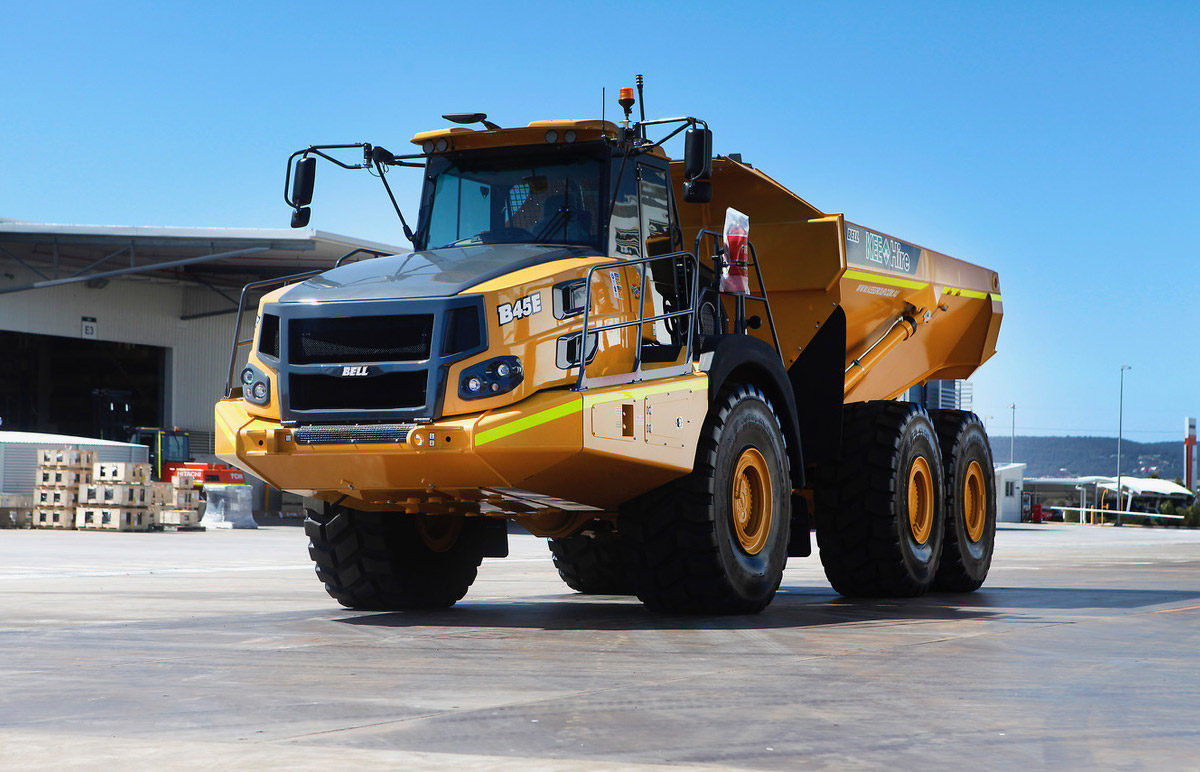
Now, after half a decade of fine-tuning their engineering and technology, they have introduced the Bell B45.

“The Bell B45 dump truck (45t) can carry about 4 tonnes more than other dump trucks in their class, and therefore they give customers more payload on-site” said Clayton. “As the Bell dump trucks are designed and built for the harsh conditions of South Africa, they are also very well suited here in Australia”.

Bell Equipment’s Articulated Dump Trucks (ADT) are incredible machines. These trucks are equipped with high power-to-weight ratios and fuel-efficiency features, making them one of the best ADTs on the market. They’re also one of the safest trucks available. They offer optimal comfort levels along with excellent multifaceted performance. The ADTs come in several different models, ensuring a perfect match for every need.

Here’s our guide to the different Bell ADT models and how to decide which is the right one for you:

Bell Dump E-Series Truck Models

The E-Series has been fitted with a Mercedes Benz 390kW/2 460Nm inline six-cylinder engine.
KEE Group has the following two models ready for hire:

B40E

The B40E elevates functionality to a whole new level of industry standards. This truck is equipped with enhancements that focus on improving processes that were at the top of the customer’s request list. It also offers the maximum level of automated machine protection available on the market.

Gross Vehicle Weight: 70,787 Kg
Engine Net Power: 359 kW
Rated Payload: 39,000 Kg

B45E

This truck is one of the biggest machines available today. Packed with power and performance, it’s rife with World Class-leading features that provide production-boosting payloads. Its benefits include lower daily operating costs, higher-grade ride quality, and top-tier safety standards. With all its advantages, it’s a prime candidate to add in your roster of project equipment.

Gross Vehicle Weight: 72,877 Kg
Engine Net Power: 369kW
Rated Payload: 41,000 Kg

Choosing the Right ADT

With a wide range of supplier ADTs at your disposal, it’s crucial for your project to choose the right one. One of the aspects to consider is the body style. With three variants on the market, you’ll have to select the type that best fits your needs.

There’s the traditional rectangle, which offers the most room on the bed’s floor. This type is one of the more popular styles, as it provides strength and agility. The second is the half-round style, which handles impact better than the traditional rectangle. It also has a lighter total weight and a greater payload capacity. And thirdly, the semi-elliptical style. This type looks like a hybrid between the previous two. It has the floors of the traditional rectangle body but with the haul shape of the half-round type.

You’ll also want to consider steel or aluminium for body metal. Steel is better for carrying abrasive materials like asphalt and gravel, as it’s more protected than aluminium. However, the latter metal is lighter and is an excellent choice for transporting non-abrasive materials. It also offers a greater payload capacity, but on the other hand, it’s more costly to repair and to purchase.

Think about your engine needs. Dump truck engines usually range between 300 to 600 horsepower. Carefully examine the load weight you intend to carry and match it to the appropriate engine, to ensure you’re paying for the truck that fits your needs.

Transmission is one of the critical aspects to deliberate over when finding the right ADT truck. Manual transmissions supply a broad range of gear options in dump trucks, offering operators more maneuverability to match the required engine speed. Although automatic transmission isn’t as flexible, it causes less operator fatigue, which occurs during long-haul jobs. However, if you want the best of both worlds, you may want to opt for an integrated automated manual transmission. This transmission provides both a more pleasant operating experience and more efficient energy consumption.

Conclusion

There are numerous ADTs available for hire equipment today. Each truck is built and designed to fulfill specific customer needs, which will help you find the perfect match. With the many benefits available in each truck model, you’re guaranteed the highest quality dump truck hire for your project.

KEE Hire has the best-trained operators in the business, paired with top-of-the-range equipment and the most reliable field support available. With our fleet of versatile heavy plant machinery available for rent, you have a choice of wet hire or dry hire. Find your perfect plant hire in Perth. Contact us today to see how we can help you with your project.

Photo Credit: Katharyn Quinn Copyright 2021

What the Future Has in Store for the Australian Construction Market

hire equipment in Perth

With the global pandemic drastically affecting everyone, almost every business sector was forced to adapt to a dramatic change in customer needs and demands. Many places in Australia are facing waves after waves of lockdowns, with some states beginning to ease out and reopen. The construction market was one of the industries that were most affected by the sudden implementation of restrictions, lockdowns, and other mandatory protocols.

The construction industry is one of the hardest-hit sectors worldwide because the physical nature of the job does not mix well with the restrictions the government imposed. Although engineering and civil construction companies are accustomed to facing cyclical downturns, the global pandemic has proved too disruptive to ignore.

The construction market faced significant limitations and challenges, such as delayed projects, employee and subcontractor health, and issues with the supply chain. With the threat of more variants nowadays, the future remains uncertain. However, the sector will have to adapt to any change that may come in the future because it’s one of the foundations of modern society.

What Changes Can the Australian Construction Market Expect?

COVID-19 has affected the demand, supply, and dynamics of the construction market. Although the future seems far away and uncertain with the repeated and sustained lockdowns in Australia, we can expect several long-term and short-term changes in the industry. These include:

1 – Investments in Digitisation

Due to the physical restrictions and social distancing protocols the government mandates, many aspects of the construction industry fall short without the help of digital tools and systems. The pandemic has changed the way people work, and everyone is now turning to the help of computers and mobile devices.

Real-time progress tracking, 4D simulation, schedule optimisation, and other high-tech digital operations are now prevalent in the industry and will likely become more crucial in the future.

Construction industries will likely invest in standardised building systems to vastly enhance their speed and efficiency. Some online channels now provide contractors with the ability to monitor employees’ safety, hire equipment, maintain cash flow, and manage resources, and these will continue to drive the industry post-pandemic.

2 – The Rise of Off-Site Construction

Off-site construction is steadily rising in popularity because it takes place in controlled environments with close management of movements and workforce interactions. A greater focus on speed, efficiency, and sustainability also tend towards the need for fabrication off-site.

3 – Increased Sustainable Practices

Sustainability is a growing concern in the construction industry, especially with the increasing awareness of climate change and global warming. The government also pushes towards environmentally friendly practices, so construction will develop towards more energy-efficient and sustainable operations to promote health and mitigate adverse environmental impacts.

Contact Trusted Construction Hire Companies

The global pandemic has been highly disruptive across all sectors, and the construction market is one of the hardest-hit industries worldwide. Despite initial fallbacks, however, the field remains essential and thriving—and the future looks promising.

If you’re looking to hire equipment in Perth, Albany, and Port Hedland, KEE Group has your requirements covered. We’ll provide you with top-quality machinery to use for your next project. Contact us today to get what you need!

3 Tips to Pick a Support Service for Your Construction Needs

advanced equipment

With so many new infrastructure projects, the need for more workers is an apparent issue that the Western Australian civil construction industry needs to solve. Of the thousands of workers required, the most significant shortage is plant operators who are experts at utilising heavy machinery, like paving equipment, excavators, loaders, dump trucks, graders, roller or fuel trucks. Other shortages also include plant mechanics, civil engineers, concrete workers, and more.

What is the takeaway here? Demand is much more than supply. The same can be said about equipment needs, where equipment shortages lead to slow-downs or even halts in construction projects. Fortunately, with help from companies like KEE Group, skilled workers and equipment shortages can be tackled. However, one shouldn’t blindly pick any company to work with. Some time and effort are needed to choose the right company to gain the equipment required for projects.

In this article, we’ll share what you can do to access the equipment you need for your civil and construction projects:

1. Talk about Support

One factor many civil and construction companies tend to think about is the support they will get. When a rented machine breaks, you’d want to ensure that the company offers around-the-clock professional support services or field-support mechanics who can come to the site to fix the problem quickly. Lousy support will only lead to terrible service, and ultimately a redundant machine.

In other words, apart from looking at what the company has to offer, it is crucial also to understand what kind of support you are getting. After-sales support is vital, and good support means you have peace of mind knowing if you need help, they are ready to assist!

2. Know Delivery Time

When talking about equipment, one crucial factor is the time it takes to deliver the equipment you need for the project—when the company dispatches it and when it will reach you. With these factors in mind, you can carefully plan your projects to complete them on time.

Keep in mind that some companies may prioritise your shipment with a little more money and offer a next-day delivery service. If this is what you need, then discuss whether or not this is possible. Or, if you choose a company like KEE Group which has its own transport arm, you can probably get a good deal for hire of machinery plus transport to the site.

3. Discuss Equipment Age

Apart from the dispatch date and the estimated time of arrival of the equipment, another factor to consider is the age of the equipment. This is important because you would not want to be handling equipment that is too old. A good rule of thumb is that if the machine is older than two or three years old, that’s generally too old already.

As such, your task would be to look for machines that are under three years old. Also, make sure that the machine is still under insurance so that if you run into any problems using their machines, they have the insurance to get it fixed.

Conclusion

By doing your research and understanding these factors when looking for any construction support service, you stand a much better chance of working with a reliable partner that can deliver on their promises, ensuring you stay on top of your projects. That said, know that different support services offer different solutions, so take the time to see if they meet your needs. If they cannot, move on. It is far better to spend the extra time finding the right partner than to make sacrifices picking a sub-par partner who can hurt your construction project’s results.

KEE Group is Australia’s most effective and unique civil and mining support service, offering machine hire, road surfacing, fuel to site, machine transport, and 24/7 field service to meet any needs. If you require advanced equipment, contact us today!

How to Pick the Right Bulldozer for Your Project

dozer hire

Dozer, short for bulldozer, is one of the staples in many industries and projects, such as mining, quarries, farms, and the like. They are a powerful piece of the machinery with a mounting plate in front to push and carry material from one place to the other easily and effectively. Dozers are also designed to rip as well as push and have either a single shank ripper or a tri-shank ripper (pictured), which break the ground up so the dozer is able to penetrate and push material.

Today, we want to talk about the dozer, more specifically what you need to know to pick the right ones:

Which Type of Dozer Should I Pick?

To pick the right type of dozer, you must understand the distinct types available. In the world of bulldozers, there are three types you can find: tracked dozers, swamp-tracked dozers, and wheeled dozers.

Tracked dozers, as the name implies, are bulldozers with tracks to operate on uneven terrain. They are also the most common type of dozer, simply because they can operate on almost any terrain. With swamp-tracked dozers, the tracks are much wider to distribute the machine’s weight over a larger surface. This makes the dozer a lot lighter, improving its grip on swampy or sandy worksites and also reduces the risk of it sinking. Finally, wheeled dozers, as you might have guessed, are bulldozers with wheels on them. They offer better speeds and manoeuvrability at the cost of power.

What Size Dozer Best Fits My Needs?

Just like how there are different types of bulldozers, there are also different size dozers for different needs. These range from the tiny D3 to the massive D11, and each has its use cases.

From D3 to D4, these are considered small dozers. They are not used often in Australia, but they still see some action, from forestry works to even agriculture. On the opposite end is the D9 to the D11 dozers, commonly used for large-scale projects.

Of all the sizes, the most common dozer size is the middle-sized dozer. These include the D5 to the D7 models. They are popular because of their incredible versatility paired with the latest features like GPS technologies. They can work on small and large construction projects with ease. As such, if you are looking for an all-in-one solution that can work for many of your projects, pick a dozer anywhere from D5 to D7.

KEE Hire has a wide variety of brands and sizes of dozers for hire, from Caterpillar, Komatsu, CASE, John Deere, and Sany. They have attachments for the blade to clear scrub up to a width of six metres and can supply the dozers with or without Topcon GPS systems. KEE also has dozers with six-way blade control, which is particularly good when using final trim GPS applications. They can also supply dozers fitted with HEPA re-breathing systems which are designed for working in asbestos conditions, to protect the operator from micro-particles.

Conclusion

With all of that in mind, we hope you will be able to pick the right bulldozer for the job. Remember, different types of dozers exist for different terrains, and there are varying sizes for each type to fit in different projects. Consider the projects you carry out commonly and create a list of requirements that your dozer must meet. In doing so, you will be able to invest in the right dozers for the job, helping you complete your projects faster and better! That said, if you are looking for dozer hire services, take the time to look for a reliable, professional company. This guarantees that you get well-maintained dozers that work well in ensuring your project gets completed!

KEE Group is Australia’s civil and mining support service, promising exceptional services covering hire, transport, surfacing, and fuel. If you are looking for dozer hire, check out what we have in our fleet.

Choosing the Right Telescopic Boom Lift Height

mining equipment hire

In most modern construction projects and high-rise buildings, there’s one piece of equipment that’s been increasing in popularity and use. Telescopic boom lifts, also called straight mast boom lifts, are great tools for a variety of different tasks, which makes them a preferred piece of project equipment by many contractors and landscapers.

However, not all telescopic boom lifts are created equal. If you’re working on a project, the right telescopic boom lift height is essential for the safety and efficiency of your workers. But how can you choose the right boom lift height and specifications for a project? The following are some factors you should consider in the selection process:

Determine the Weight Capacity

Make sure the telescopic boom lift you choose can support enough weight for the task at hand. Whether it needs to carry one or two people, or maybe a couple of pieces of heavy equipment or materials, your telescopic boom weight should be steady and sturdy enough to carry the load.

You should also think about the weight of a fully-loaded machine. If your equipment becomes too heavy, it could get stuck or damage the concrete or flooring. If you’re working on a project that requires you to have different weight capacities for your equipment, renting out may be a better option. That way, you can just hire equipment that has the proper specifications you need on a particular project. By renting instead of buying, you can also avoid paying for maintenance or storing large equipment that you’re not currently using.

Calculating the Boom Lift Height and Range

Telescopic boom lifts extend a straight, unjointed lifting arm and provide easy access to aerial working locations both vertically and horizontally. They have an even greater reach than an articulated boom lift, with the largest models reaching heights of up to 19 stories.

Now, to calculate the exact height and range that you need for a project, you need to use an ultrasonic distance meter. The smallest models are 40 feet tall, while the largest telescopic boom lifts can go as high as 180 feet tall. If you’re aiming for a 40-foot machine, it typically has a maximum range or horizontal reach of about 34 feet, while a 120-foot machine has a range of more or less 75 feet. Based on those measurements, you can determine just what kind of telescopic boom lift you need for your project.

Assessing the Size of the Platform

When loading equipment or materials on a telescopic boom lift, it’s recommended that you avoid putting anything larger than its platform, even if the load is relatively light. That’s why it’s important to choose a boom lift with a platform big enough to fit all the items you need on it. For example, a 120-foot lift will have a platform measuring 96 inches long and 36 inches wide.

Wider platforms generally have lower weight capacities because they’re heavier. The shape also affects the telescopic boom lift’s centre of gravity, so make sure you choose the right size and shape of the platform.

Conclusion

When it comes to working on stable platforms at great heights, telescopic boom lifts are the best. However, to make sure they work and function properly, you need to find the right specifications to serve your needs. This guide should help you get an idea of how to choose the right telescopic boom lift for the completion of your project.

KEE Group is a multi-faceted company offering civil support services with an exceptional track record. Our equipment hiring division travels around the world to source the most technologically advanced machinery and equipment. If you ever need construction or mining equipment for hire, or maybe you need a hand with transporting your boom lift, we are the company of choice. Contact us today to get started!

Ask These Questions When Choosing a Plant Hire Company

rent equipment in Perth

Carrying out a project or performing business operations does not mean spending a lot of money on procuring heavy machinery. You can accomplish the things you need to by renting equipment from a professional plant hire company.

There are many advantages to hiring equipment instead of buying it. First of all, buying means significant capital expenses. Plant hire costs are obviously much lower than buying outright. What’s more, you don’t need to worry about repair and maintenance costs since you’re hiring.

Renting equipment also saves time and money. If you do not use specific tools or vehicles regularly, it is more efficient for you to rent them. The cost you have to put into renting might also be tax-deductible, which means even more savings for your company. Some plant hire services also have the capacity for on-site maintenance. You can call them if you find issues with their machines, and they can go to you and see what is wrong.

In hiring heavy equipment, you need to have a step-by-step process. You cannot go out and rent the first tool or vehicle that looks like it could do the job. Here are things to remember when evaluating plant hire services.

How Much Equipment Do They Have for Hire?

It is always better to rent equipment from specialised plant hire companies. Speak with an expert to know if the equipment you need for your project is available—the company you want to partner with should have various equipment and attachments to provide you with the best one for your needs. Large-scale plant hire companies will have hundreds of units for hire, so you have a wide variety of brands and models to consider.

How Old Are the Units They Have for Hire?

You must also consider the age of the equipment you want to rent. It is crucial to discuss the equipment’s age with the professionals—don’t hire the really old machines. Older units mean a higher chance of mechanical failure. To avoid dealing with delays from parts breaking down, look for machines that are two to five years old. Also, consider hiring from companies that provide insurance coverage on their vehicles. If you find issues in these units, the plant hire company can claim the insurance for repairs.

How Soon Can They Deliver the Equipment?

Also, you need to know when they will dispatch the equipment. You should be aware of delivery times, conditions for delivering, and other matters. If you need immediate delivery, you should inform the plant hire company. Some offer next-day delivery, but you must clarify with them that you prefer this for the equipment you’re hiring. If you aren’t on the same page regarding delivery times, it might cause delays right at the start of the project.
Some companies might have machines on display at the front of their yard, and one would assume they are ready to go. But you would be surprised at how often this is not the case. With B-Team outfits, they often wait until the machine is booked to be hired before they bother to fix it!

Do They Offer Support to Their Renters?

Having the equipment you need for a project is one thing—getting the service support you need is another. The company you rent your tools and vehicles from should offer support while their equipment is with you. For instance, they should provide repair and maintenance services. You don’t need to pay more for machine maintenance—the plant hire company’s engineers should be able to repair and maintain these machines on-site, or supply a new unit.

Conclusion

Renting equipment for a short-term project is often the best route, especially for companies that only need to use machines like excavators, smooth-drum rollers, multi-tyre rollers, or dump trucks for a one-off project. Finding the best company to rent from involves a little research. Generally speaking, though, you want to hire from a place that ensures it has up-to-date equipment, streamlined processes, and a robust support system for its renters.

At KEE Group, you’re sure to get top-notch equipment and service. You can rent equipment in Perth from KEE Hire, the hire company of choice for Western Australia’s largest infrastructure projects. We also have KEE Transport, our truck hire and haulage solutions arm, which covers the whole of Australia and can transport your hired equipment to site. Get in touch today for enquiries!

Enquire today

Get a Quote today!

Please fill in your details and a KEE Hire team member will reach out to you very soon.

Alternatively, you can contact us via the details below:

contactus@keegroup.com.au

+61 8 6401 8500

"*" indicates required fields

DD slash MM slash YYYY

Our people are our greatest asset

KEE Group are growing fast and we are often looking for the right people to help us make it happen. If you would like to join our team and share in the excitement, get in touch today!

Join The Team