Why Soil Compaction is Crucial in Construction

compaction hire

The density of the soil is crucial for construction sites. Almost anything that has to do with construction will be affected by how dense the soil is. It will give you the foundation for your construction. On the other hand, incorrect compaction of soil can lead to trouble during construction.

What Is Soil Compaction?

Soil compaction is a process in which pressure is applied to the soil, and in turn, it becomes denser. The pressure can be applied by tools such as a plate compactor or a roller. There are many different methods of soil compaction and they all carry different levels of effectiveness.

An important step in making a stable construction site with a good foundation is making sure that the soil has been compacted correctly. It’s a complicated process that takes into account many factors.

Soil Compaction in Residential Construction

For residential sites, soil compaction should be done in a way that will have a strong foundation to support the weight of the house. The soil should be compacted down so that the house will be stable when the foundation is laid on it. When soil is too loose, the house can move when it is built and you’d end up with a house with a shaky foundation.

The best type of roller to use in a residential area, would be the oscillating smooth drum roller. Oscillation is a gentle, yet highly effective compaction method, and has today become a standard compaction method in sensitive areas or in the vicinity of buildings and houses. Oscillation uses less force but delivers both vertical and horizontal energy, essentially manipulating the aggregates into place.

Soil Compaction in Commercial Construction

Commercial construction sites have their own standards. They require soil compaction to make building a multi-story structure easier. The higher the building, the more compact the soil needs to be.

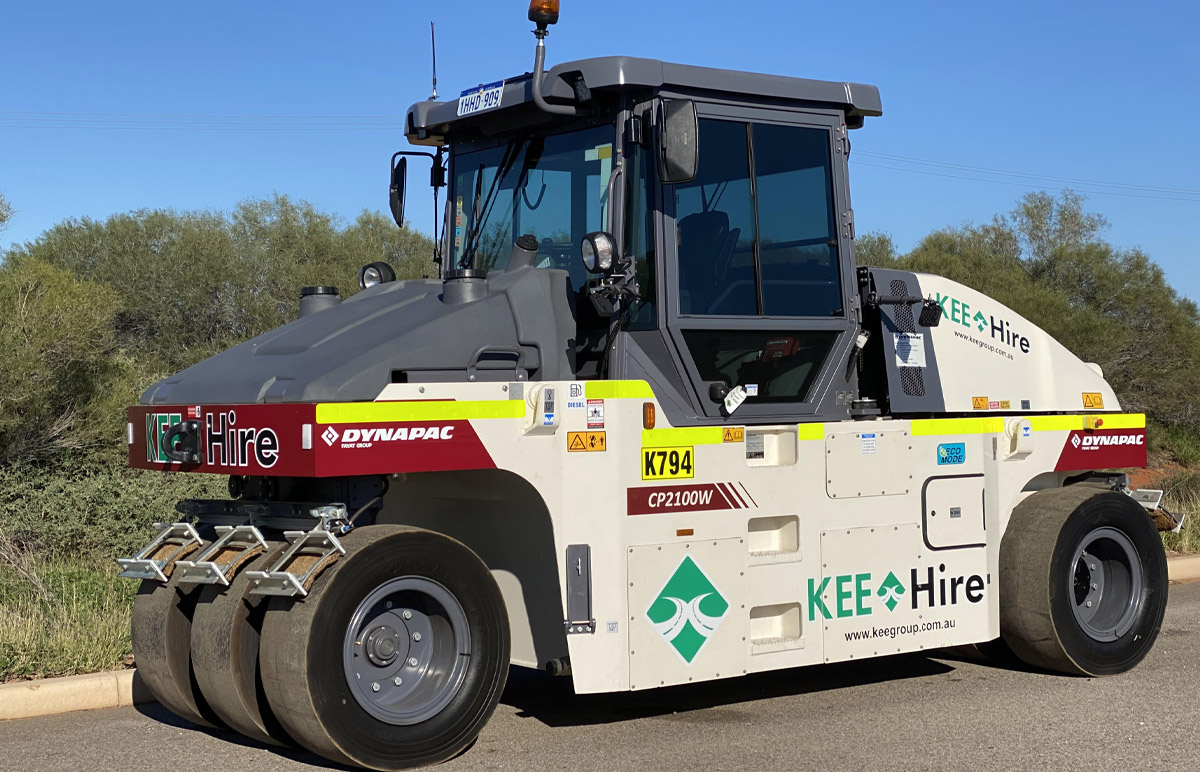
Remember that the weight of the building is going to be distributed to the ground, so when you compact the soil, it should be enough to support its weight. Smooth drum rollers (vibratory), pad-foot rollers, double-drum rollers, pneumatic rollers or multi-tyre rollers can all be used in commercial construction.

Soil Compaction in Industrial Construction

Industrial construction sites can also have their own set of requirements when it comes to soil compaction. Depending on the type of building being constructed, soil compaction should be done to support the structure. This is especially true if a lot of equipment will be placed on the location; it should have enough support from the soil.

How Does Soil Compaction Work?

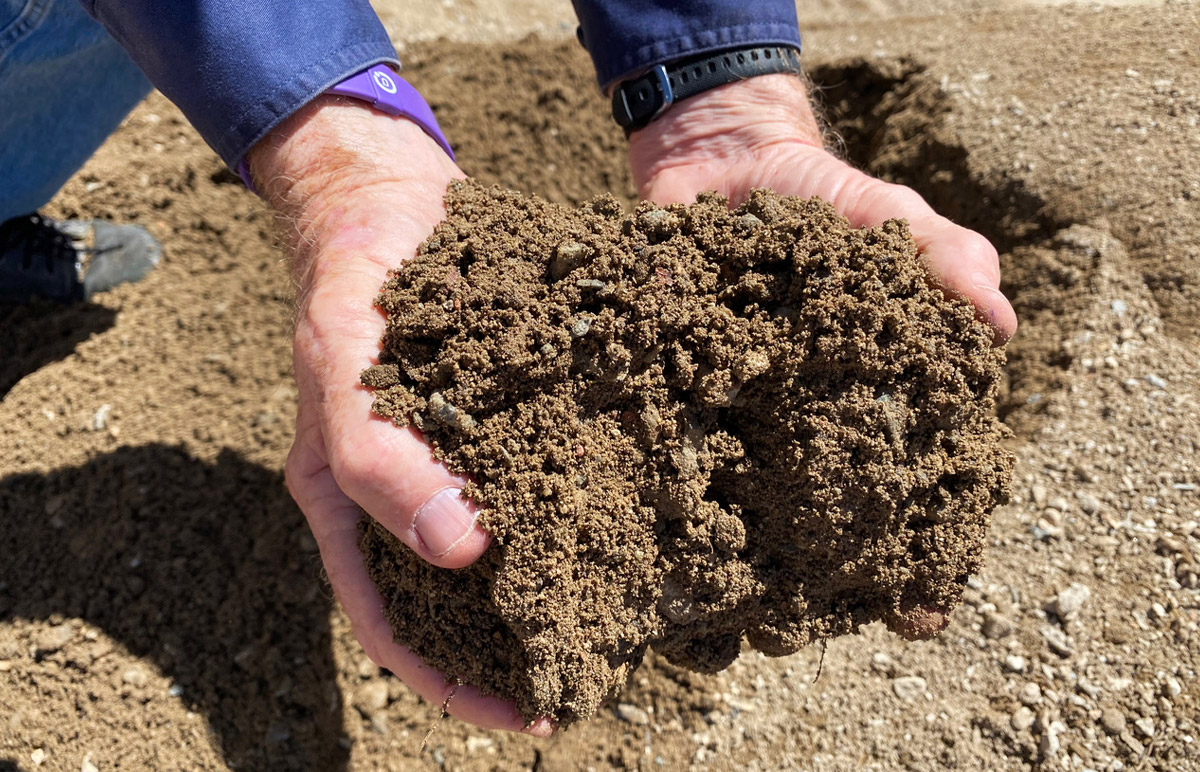
Soil compaction, or density, is measured by how much sand, silt and clay is present in a cubic foot of soil. Density is also measured by the percentage of each component present in the soil.

First, a contractor needs to perform a soil test and check the components of the soil. They check the percentage of sand, silt and clay present in the soil. This will determine how much the soil has to be compacted. A heavy tractor is then used to compact the soil until it is of the proper density.

If you need to compact the soil for residential construction, you should achieve the proper density for your foundation. However, if your soil is not durable, you can use additives to make the soil less porous and less susceptible to water. Using additives can make the soil denser and solid enough to support the weight of a house.

Conclusion

Soil that is compacted consistently over time becomes a denser soil that can act as a better support system for roads, site foundations and more. Those involved in construction need to remember that proper compaction is crucial to preventing future complications.

Do you need a compaction hire in Perth, Albany and Port Headland? Contact our team at KEE Group. We are the most effective civil and mining support service in Australia.

6 Essential Things to Consider When Hiring an Excavator

plant hire perth

Selecting the right excavator is important when it comes to boosting worker safety and increasing output. Certain companies prioritise plant hires without first undertaking a needs assessment, which results in lost output and costly delays. To guide you, here are the essential considerations when hiring an excavator.

Excavator Diametre

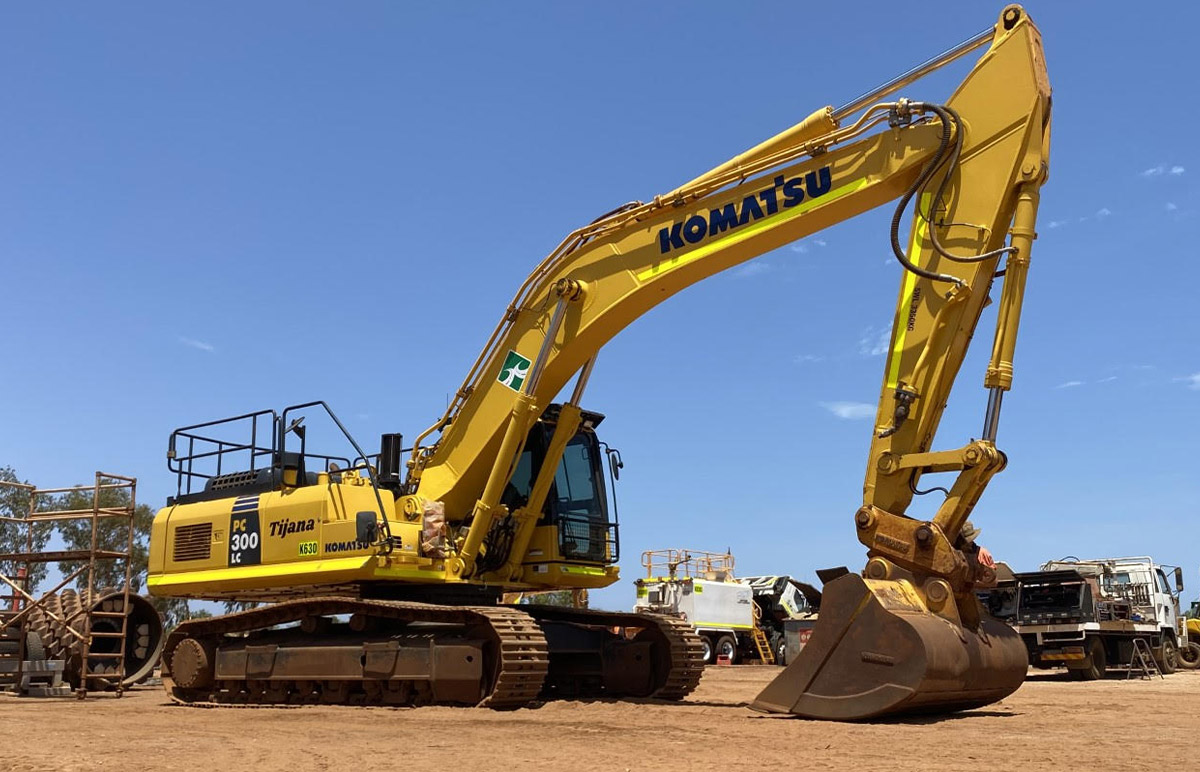
Excavator size ranges from tiny and lightweight to behemoths weighing more than 90 tonnes. Mini excavators are best suited for small jobs where agility and versatility are more critical than load capacity. They can also save money when a larger model is not necessary.

For activities needing more weight capacity and less back and forth movement, a larger excavator may be necessary. Furthermore, storage and operations areas must be examined to ensure they are accessible to larger machines.

Common Jobs

Almost every form of construction project needs clearing, excavation and grading. The most important consideration when choosing an excavator for these applications is the purpose for which it will be employed. Choosing equipment for excavation vs site preparation can be a world of difference.

A reduced tail swing model, for example, is not the best answer for clearing and grading a 25-acre plot of ground in preparation for a residential development that also necessitates a large retaining wall. An excavator with a bucket is insufficient for these tasks. Instead, you’ll need a machine capable of clearing, expanding, constructing and installing.

Excavating Depth and Strength

Excavators are built to work at varying depths and to be more powerful than others. Try to calculate the earth’s depth and the amount of force required to excavate and transport the material on your next project. Certain materials may necessitate the use of additional attachments in order to be penetrated.

Dump Location and Height

You must also consider where the excavator’s load should be discharged. This is frequently ignored when dumping in a pit or on a truck. Ascertain that the excavator you hire has a sufficient boom height to do the operation safely and efficiently.

Bucket Types

Choosing the right bucket and attachment for the job is just as important as choosing the right excavator. In light of this, you must also take into account the materials to be transported as well as the anticipated load capacity.

As with any endeavour, it is critical to define specific goals. Before hiring an excavator, consider the size, timing and specific needs of the job. If you have any questions, contact your source.

Smart Technology for Efficiencies

Excavators are becoming smarter with new technology. With the introduction of new models, the sector gains machines outfitted with electronic intelligence, allowing fleet managers to remotely monitor equipment via telematics, some of which are free. These technologies provide owners and operators with additional data, allowing them to better manage maintenance schedules, analyse operational data and increase machine productivity.

Furthermore, the engine-hydraulics interface is being tuned in order to increase manpower efficiency and fuel economy. Variable-speed machines reduce engine rpm during periods of low workloads, such as the swing phase of a dig cycle. This saves energy and improves the vehicle’s fuel economy. A machine’s hydraulic pump torque and engine response can also be adjusted to match the workload, minimizing engine overload and needless fuel use.

Conclusion

Now that you are well-informed about the things to consider in hiring an excavator, we hope you’ll find it easier to decide what digger you will need for your next construction project. To add, you must also keep in mind that you have to work with a professional you can trust! With your newfound knowledge and the expertise of a skilled excavator, there will be no need to worry.

Are you looking for heavy plant hire in Perth? Contact KEE Group, a family-owned business that has a proven track record of providing exceptional civil support services in Australia. We take pleasure in having the greatest equipment, but also in the most dedicated staff of technicians, engineers and coordinators to assist our clients’ machinery.

What are the Different Types of Motor Graders?

machinery for hire

A grader is a piece of construction equipment with a long blade used to create a level surface during the grading process. These machines evolved from creating a flat surface for roadways and other surfaces. The first iterations of the machine were pulled behind horses or farm animals, but modern graders contain a motor, so they are technically known as “motor graders.”

Different Types of Motor Graders

Motor graders usually come with a long metal blade hinged at one end. Some graders have a long metal arm attached to the hinged end, while others have a short blade and a long metal arm. Motor graders can be divided into classes based on the size of their blades. Most modern graders can be classified as “small,” “medium,” or “large,

Small Motor Graders

Small motor graders have small blades to fit in small or tight areas. Most of the time, they have the same controls as larger machines, used for the same purposes. Road graders of this size are commonly used for small construction jobs or landscaping.

Medium Motor Graders

Medium road graders have longer blades that can cover long stretches of land. They also have larger wheels and are used for larger jobs. Medium motor graders are commonly used for highways, roads, and large construction sites.

Large Motor Graders

Large graders are sometimes called “heavy motor graders”. The large motor grader is also used to prepare large areas of land for residential or commercial use.

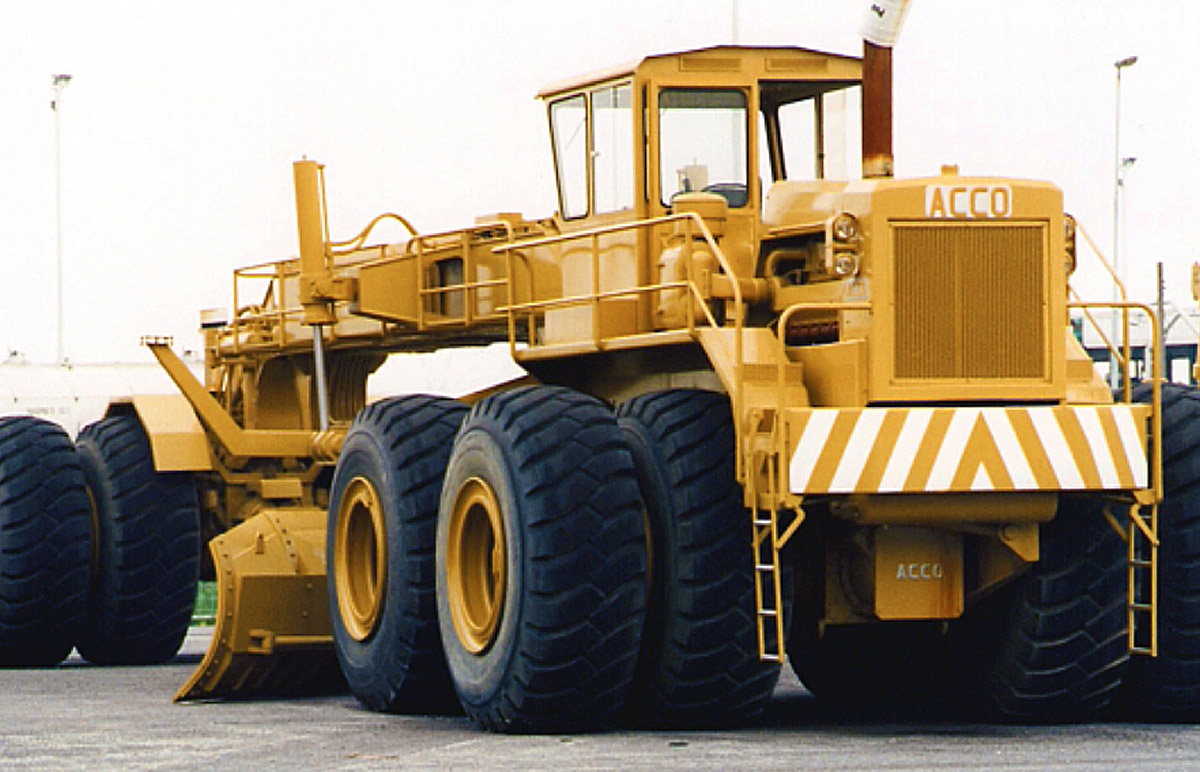
The world’s largest motor grader was built in 1980, by the Italian Umberto Acco Company (pictured). The ACCO grader was a giant, measuring over 7.3 metres and weighing 181,437 kilograms. The monster grader included a blade over nine metres long and a total of 12 tyres. The front and rear of the machine articulated separately.

Motor graders can not only be classified by their size, but also depending on the arrangement of their frame. There are two types of categories graders can fall under; rigid frame motor grader and articulated frame motor grader.

Rigid Frame Motor Grader

The rigid frame motor grader is the most traditional kind, and it is usually used for everyday grading tasks. Rigid frame motor graders are commonly used to grade farm or construction use. This motor grader has a long rectangular frame that forms a rectangle. You’ll see it has four wheels attached to it on the frame. There are two on the front of the frame and two on the back. Meanwhile, the blade is attached to the frame by hinges, and it swings back and forth depending on how the machine is being operated. To control it, on the far back of the machine, at the tail end, is a push bar that is used to steer the machine.

Articulated Frame Motor Grader

Articulated frame motor graders are usually used for larger jobs. This type of machine has an articulated frame attached to two larger wheels. Each wheel has a steering wheel attached to it. The steering wheel is used to steer the blade along the road’s surface. Both wheels can pivot to allow the machine to turn in tight areas and driveways. The best thing about articulated frame motor graders is that they can go anywhere a truck can, and go faster than a small framed machine.

Summary

Road graders can be used for various applications, including grading, finishing, road building and snow removal. They are heavy duty machines with long blades.

Nowadays, grading machines can be classified by their size, frame, or uses. Rigid frame graders are the most traditional machines, while articulated frame motor graders are larger and are used to build big roads. But apart from that, there are also various types like small, medium, and large motor graders.

If you are interested in high-quality machinery for hire in Perth, Albany, and Port Hedland, we can help you! Here at KEE Group, we can supply you with our equipment as dry hire or fully wet hire. You can count on us to provide you with effective support and services. Contact us at +61 8 6401 8500, and let’s discuss your project today!

Why are Graders Important in Road Construction?

field services

One of the most extensively used heavy-duty machines for road construction and maintenance is the grader. Also known as the road grader, these machines are used to create broad, flat surfaces. In other words, it can be used to spread material and flatten it. As you might have guessed, this is incredibly important for road construction, as the flatter the spread is, the smoother and more durable the road becomes.

Today, we want to delve deeper into motor graders, highlighting exactly why they are so important for road construction:

Why Grade Roads?

For road construction, motor graders are the most efficient way to create safer and smoother roads. The idea here is to remove large rocks and even out areas. Further, by grading the road, you can create a lighter layer of asphalt over the existing layer of asphalt. As the layer of material that is newly laid down is lighter, it is easier to push into the underlying layers.

As you can imagine, the process of grading the road allows for a smoother and more robust final product.

How do Motor Graders Work?

Road graders are designed for use in large fields. Rather than performing the work of grading the road, they are used to prepare the road for maintenance. Typically, they are used for clearing sloped areas, creating building pads, creating ditches, etc. While you could theoretically use other heavy-duty machinery to perform these tasks, these machines are much larger and offer much more power.

As far as their design goes, graders are similar to tractors. They are large, powerful machines that can tackle almost any type of terrain.

Why Are Graders Important in Road Construction?

By creating a perfect surface, you can lay down an asphalt road that is not only smooth but that has the proper drainage. With proper drainage, the road can cope with any weather. Additionally, you’ll be able to lay down the asphalt in much fewer layers than you would if you didn’t grade the road beforehand. This makes the road not only cheaper to construct but much safer.

Another significant benefit of grading roads is that you can lay down a lighter layer of asphalt, which makes the road easier to push into the older layers. As the road will be used for vehicles, this is extremely important. It is also imperative that your road can withstand the weight of the vehicles that will be driving on it. Having a properly graded road will not only make it safe to drive on, but it will last much longer.

Conclusion

As you can see, graders are a vital part of road construction and maintenance. Without them, we would not be able to create the smooth and even surfaces we need for safe and reliable roads. While there are different types and sizes of motor graders, they all serve the same purpose. By creating a solid and even surface, we can lay down a new layer of asphalt which makes the road both safer and more durable. And of course, we’re able to do it all by using a single machine.

KEE Group is Australia’s civil and mining support service, offering hire, surfacing, transport, and fuel services to meet various needs. If you are looking for field services and more to meet your surfacing needs, work with us today!

How to Ensure Your Grader is In Good Condition

graders for hire in Perth

Graders are a versatile piece of heavy construction equipment used in various on-site grading tasks. It’s primarily used to level the ground after the pitch has been laid, so the operator must be well-trained and knowledgeable of its multiple controls.

Here are some tips and tricks on how you can adequately care for motor graders:

Regular Maintenance Schedule to Reduce Breakdowns

The road grader should undergo regular maintenance to ensure that it’s in good working condition. It should have regular oil changes, an inspection of air filters, cylinders, air-compressor, fuel lines, cab, engines, hydraulic systems, and so on.

If possible, you should also have it inspected by an expert to determine if other parts might need replacement.

Drive at a Safe Speed

Before driving your motor grader, make sure the speed is safe for your rig. If you’re planning on doing some intricate grading tasks, you should drive at a slower pace and be extra careful about your manoeuvring. Always remember that safety should always be number one.

Keep Your Tyres in Good Condition

These vehicles have tyres that need to be maintained and kept in good condition, just like a car. Check the tyre pressure and tread of the tyres regularly so you can fix any possible leaks or cracks.

Keep Your Motor Grader Clean

A road grader needs to be kept clean. Erase dirt marks on the vehicle using a grease-cutting solvent. This way, you can keep it in tip-top shape.

Keep an Eye on the Tyre Pressure

Consistently having the correct tyre pressure of your motor grader can save you from getting into some serious trouble. That’s why it’s essential to check the tyre pressure regularly. You should be able to feel it out if the tyre is too hard or too soft.

It’s also important to note that the machine shouldn’t be used if any leak-related problems are present.

Keep the Safety Mechanism in Good Condition

The safety mechanism is called a rollover protection structure (ROPS). It’s a safety cage uniquely designed for motor graders. The structure should be in good condition to avoid getting damaged when the equipment is being operated.

How to Avoid Common Mistakes When Operating a Motor Grader

Like other heavy construction machines, graders are very powerful and can cause injuries to their operators if not appropriately handled. You must use the right safety gear and operate it safely, so you don’t get injured or cause accidents.

Here are some tips on how you can safely operate your grader:

Stay Alert to Avoid Accidents

The operator of the motor grader should always be alert to avoid accidents. If you’re planning to do intricate grading tasks, then you should be extra careful about your safety.

Lockout or Tagout Any Potentially Dangerous Part

If any parts in your grader can cause injuries to you or any other person, you should lock them out or tag them out to avoid any accidents.

Conclusion

Graders are very powerful and versatile pieces of equipment that can help you in many ways in building and grading.

It’s a powerful machine that can help you level the ground quickly and efficiently, and it’s important to know how to use it to get the most out of it. Consider these tips when operating your grader, and you’ll be good to go.

KEE Group is Australia’s most effective and unique civil and mining support. Our services are divided into four sub-services: KEE Hire, KEE Surfacing, KEE Transport and KEE Fuel. Not only have we invested in the most state-of-the-art equipment, but more importantly, we’ve invested in the most experienced team of mechanics, engineers and coordinators to support our clients with their machinery 24/7. If you need graders for hire in Perth, Albany, or Port Hedland, or anywhere in WA, get in touch with us now!

Understanding the Importance of Road Seals in Australia

hire equipment

In Australia and New Zealand, road seals are an integral part of the road infrastructure. Much of Australia is sparsely inhabited, with significant gaps between population centres. Developing outstanding skills in low-cost road construction and maintenance techniques has been necessary to provide a network of sealed roads. In New Zealand, a limited population base has fuelled the demand for low-cost road construction.

The Importance of Road Sealing in Australia’s Road System

The Australian road network spans 810,000 kilometres, with 330000 kilometres paved with sprayed sealants, concrete, or asphalt. As a result, in many rural locations, sprayed sealants are the preferred method of the surface.

Sprayed seal regions account for 70% of all paved roads in this regard. Sprayed seals are maintained in place by combining binders and aggregate, allowing them to cling to the underlying base and binder, rising and filling the space between the aggregates.

1. Minimises Wear and Tear on Vehicles

Uneven, broken, or pothole-filled roads pose a significant danger to drivers and pedestrians alike.

It’s not always possible to drive around a pothole, and if you ride or drive over one by accident, your tyres are very likely to sustain damage. This is a particular issue for people on motorbikes because it can cause them to tumble off their motorbikes and into oncoming traffic.

Driving over potholes repeatedly can wear down the suspension and produce uneven wear in cars, while pedestrians might trip and fall on uneven portions of the road.

2. Makes Travel Smoother and More Comfortable

Tyres have the best grip on a sealed road surface. When a vehicle is on the road, especially at high speeds, it will be easier to stop and direct the car back onto the road if the vehicle’s tyres can grip the adequately-sealed shoulder surface.

3. Improves the Appearance of the Road

Uneven and damaged roads appear unsightly, and they make road users insecure about the surface’s stability. When damage is left unrepaired, the area can become unpleasant for road users and appear unkempt, whether on a busy road, a residential street, or outside retail stores. Nobody wants to look out their windows and see a rocky road, much less drive on it!

The Road Sealing Process

  1. Before sealing, road cracks are mended with sealants to prepare the road surface.
  2. The road surface is subsequently sprayed with a mixture of asphalt and water. The water in this mixture evaporates almost instantly.
  3. A layer of gravel is laid over the area immediately after spraying the asphalt-water mixture.
  4. With rollers, the gravel is compressed and embedded into the asphalt. Sand is sometimes used to help in the consolidation and curing process. Some pebbles will not become incorporated in the asphalt despite the use of high-pressure rollers.
  5. While the water evaporates, the surface is left to cure for up to two days. The process speeds up during the summer, where the weather is hot and dry, so contractors prefer to work during the summer months. During the curing process, traffic can travel over this surface at reduced speeds.
  6. Finally, any loose gravel is scraped off the seal-coated surface. This requires multiple sweeps by a machine.


Conclusion

There’s no arguing that Australia’s road infrastructure requires continuous repair and improvements. Thankfully, road sealing can significantly improve and revitalise the functionality of our roadways.

KEE Group has several divisions under its surfacing umbrella. These include KEE Spray Seal, KEE Asphalt, KEE Profiling and KEE Bascourse Paving.

KEE Group is Australia’s most effective and unique civil and mining support service. We provide top-grade machinery for your projects at an affordable cost. If you’re looking to hire equipment in Perth, Albany and Port Hedland, don’t hesitate to contact us today!

IMAGE © Katharyn Quinn 2021

Enquire today

Get a Quote today!

Please fill in your details and a KEE Hire team member will reach out to you very soon.

Alternatively, you can contact us via the details below:

contactus@keegroup.com.au

+61 8 6401 8500

"*" indicates required fields

DD slash MM slash YYYY

Our people are our greatest asset

KEE Group are growing fast and we are often looking for the right people to help us make it happen. If you would like to join our team and share in the excitement, get in touch today!

Join The Team