Why Hire a Water Truck for Your Next Mining Project

water truck hire in perth

Everything on this planet is constantly evolving. While we’re aware of the digital advancements we’ve recently incorporated into our lives, there are a plethora of industries that are constantly experiencing innovation as well.

When it comes to construction and mining, many think that these businesses are stuck in traditional ways. While some traditional techniques are still being carried out, many companies are incorporating new tools and knowledge to help elevate their business’s performance and operations. One shift that’s being integrated into the construction and mining industries is the use of water trucks.

Water trucks are often used to collect and disperse water, depending on the job. This is because they’re equipped with various tools that allow them to get water from a distance and spray them in different directions.

However, they’ve come a long way from just getting water. With new technology, water tanks can also suppress dust and have been widely used in mining and construction projects. Seeing as more industries are getting water tanks for the job, let’s dig deeper into water truck hire and how it can help your business.

What are Water Trucks For?

In a construction or mining project setting, water carts are used as soil compactors, dust suppressants, and environmental rehabilitation. Seeing as water trucks have more uses now, there has been a boom in water truck hires across the country.

When you’re going through a construction project, there’s a high chance that potential contaminants can turn into dusk and potentially pose a health risk to people in the area. This is particularly dangerous because air quality is not entirely visible, so you may not know that it’s already affecting your body. For this reason, contractors use water carts to help suppress dust onsite.

Soil compaction is another purpose of water trucks. During road construction, dust and soil need to be compacted to ensure a high-quality road and eliminate premature deterioration. The water truck works by constantly spraying the road to help it stay bound together.

How are Water Tanks Designed?

The way contractors and equipment operators get and apply water may impact overall operations. Although water tanks were primarily designed to get water, new tech has made them efficient for dust control as well.

Traditionally, round water tanks were the most common design. But these old designs raise the water’s centre of gravity, making the tank smaller than the actual truck, making it less stable and unsafe for long-haul roads. Operators don’t fill the tank to fight this instability, but this can be detrimental to operations since it increases downtime and fuel consumption due to having to refill from a water source.

However, water tanks with square corners can help minimize this issue and they also have a larger capacity, which enhances the overall stability of the truck. This allows operators to drive longer roads and have more water, ensuring a reduced consumption of gas.

The Bottom Line: Work with a Water Truck Hire You Can Trust

Seeing as water trucks have more uses and can be an efficient tool for your construction or mining project, if you’re thinking of getting a water truck hire, it’s worth getting one from a company you can trust. This way, you can rest well knowing you’re operating high-quality machinery and equipment that could help boost your project’s overall performance and output.

How Can We Help You?

Are you looking for a water truck hire in Perth? If so, you’ve come to the right place.

KEE Group offers dry hire and wet hire services, with rollers, excavators, skid steers, graders, loaders, semi-tippers, low loaders, and more. If you have multiple requirements, KEE Group is the one solution you need.

Call our team today at (08) 6401 8500 to learn more about how we can help you!

Which Properties Make Bitumen Great for Roads

construction service for hire

Bitumen is often used in road construction thanks to its advantages over most pavement construction materials. Bitumen has unique properties built in from its manufacture, which are widely beneficial to road construction.

Here are the reasons why bitumen has significant application in constructing flexible pavements:

1. It is Versatile

Bitumen’s physical and rheological properties are factors in load level, temperature, and duration of loading. Since bitumen is a thermoplastic and viscoelastic material, these dependencies allow constructors to assess and consider the traffic on the road so that the suitable bitumen mix properties are used based on the calculated stress levels.

Moreover, this versatility allows constructors to base the bitumen mix on the road traffic and other factors. As a result, they can produce a wide variety of mixes based on road application.

2. It Is Economical

Bitumen is made from distilling crude oil, which in itself is a composition of hydrocarbons. The main products available are high octane fuels, petrol, diesel and gasoline. When these fuels are refined from crude oil, only the bitumen is left behind.

The bitumen is then further treated to rid it of impurities. As an essential product for society, bitumen as a by-product is set to stay in the market for a long time. It is primarily used as a construction material.

3. It Has a Low Melting Point

Another advantage of bitumen is that it has a low and favourable melting point, allowing it to both surface dressing and wear resistance quickly. Bitumen’s melting point is not so low that it melts easily while still being applied to the pavement.

At the same time, bitumen’s favourable melting point prevents the already cast road from melting and deforming under high temperatures. The material’s aggregate composition helps protect it against the effects of hotter areas.

4. It Has an Adhesive Nature

During the production of bitumen, it is freed from hydrocarbons, eliminating its toxicity. The by-product is refined to a maximum to eliminate organic materials and impurities effectively. Bitumen’s adhesive nature keeps materials in the rod mix bound together under strong bonds, becoming stronger once the mix sets in and is ready for vehicular movement on it.

5. It Can Be Recycled

Besides bitumen having a low and favourable melting point, it can also be melted back to its original state. This is called the asphalt recycling process. The torn-up asphalt pieces can be taken to the plant to undergo recycling and then be reused. If necessary, the old bitumen is mixed with new bitumen and new aggregates to liven up the mix.

6. It Comes in Various Colours

While bitumen is generally black in colour (due to the dense organic material within it), pigments can be added to obtain any colour of your choice. Coloured bitumen is usually more expensive than the standard kind and can be slightly disadvantageous due to the amount of chemical additives and materials needed to make it.

Conclusion

Bitumen has remarkable properties that make it an excellent material for road construction. From its favourable melting point to its chemical compositions it is ideal for exposure to harsh weather conditions, as tested by our Australian summers.

KEE Group is Australia’s most effective and unique civil and mining support service. We are a multi-faceted, family-owned and operated civil support services provider that has a demonstrated record of providing an exceptional service of which we believe has no equal anywhere in Australia. We have our own KEE Surfacing division, covering asphalt, profiling, spray-seal and basecourse paving. If you require a reliable surfacing crew get in touch with us now! We are highly unique, highly effective and highly regarded. If you need a reliable construction service for hire in Western Australia, we’re the ones to call!

Smooth Rollers Vs. Padfoot Rollers: Which is Better for Your Project?

rent equipment

When you’re looking to rent equipment for your construction project, choosing the right type of machinery to get the correct results is essential. With the plethora of equipment out there, making the right decision can be quite daunting, even when you’re only choosing from two options.

Perhaps you’re here because you’re looking to rent a compaction roller for your job site, but you’re stuck wondering if a padfoot roller or a smooth roller would do the trick. Choosing the best one will depend on your project’s needs, the size of your project, and the ground you need to compact.

If you’re stuck between the two, keep reading. Our team created a quick guide so you can understand the difference between a Smooth and Padfoot roller, allowing you to choose the best one for your construction project.

What is a Roller?

A roller is also known as a vibratory compactor, and its job is to rearrange particles in the soil to decrease voids and enhance its density, providing your surface with load-bearing strength.

Compaction rollers use a circular wheel, known as a drum, to flatten and crush the soil it rolls over. This heavy machinery is most often used for road work. Without them, surfaces would become irregular and more susceptible to wear and tear, which could be dangerous for citizens.

If you’re looking to rent equipment, it pays to know the difference between the two rollers, so you can choose the best one for your job site.

What is a Smooth Roller?

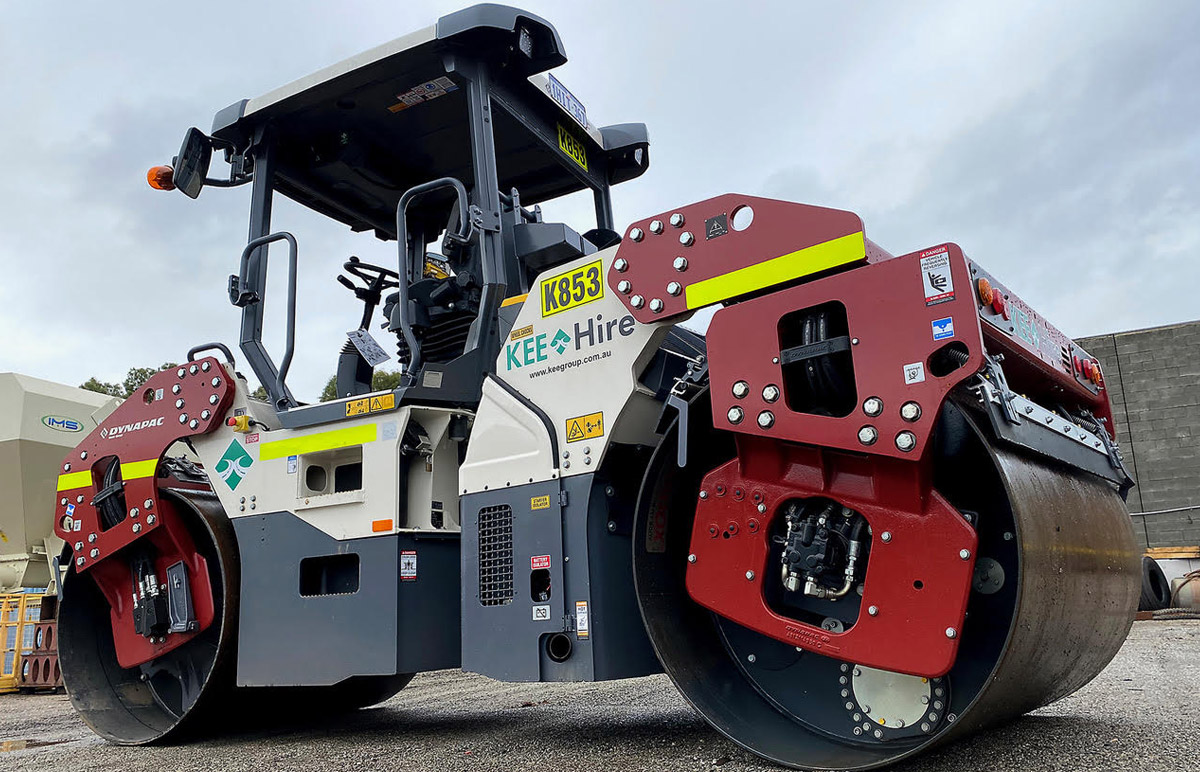
Smooth drum rollers use vibration, static pressure, and impact to compact various surface materials, including sand, gravel, rocks, and asphalt. Many road projects use smooth rollers to flatten and smoothen surfaces successfully, making them one of the most common pieces of equipment for roller hire.

  • Single-Drum Roller: This type of smooth roller uses a steel drum at the front and pneumatic tyres at the back, providing you with quality traction.
  • Double-Drum Roller: Unlike the single-drum roller, this type of roller has a twin-drum located at the front and the back. With less tyres the machine has less traction.

Smooth rollers are best for construction and road work job sites since they compact gravel, asphalt, and soil, turning any surface into driveways, foundations, and pavements. Not to mention, they work best for lengthy road projects.

What is a Padfoot Roller?

Padfoot rollers generate static pressure, impact, and vibration, similar to smooth rollers while generating manipulative force. Because of this, you get uniform compaction in the entire process. Also called sheeps- foot rollers, it uses tapered pads to penetrate and compact the soil to build its strength.

Padfoot rollers are best for projects where you need to compact soil at greater depths. Additionally, this roller type is best if you need to fill trenches in a narrow space since it gives you maneuverability.

The Bottom Line: Knowing What Type of Roller Works for Your Project Can Give You the Results You Need

Seeing as it can be confusing to choose which type of roller you should choose, it’s best to work with credible, professional roller hire companies to ensure you get the best option for your project. Knowing which roller to use will ensure your project is successful, allowing you to get the desired results.

How Can KEE Group Help You?

If you’re looking to rent equipment, it’s best to reach out to a company that you know would give you exactly what you need—that’s where we come in.

KEE Group offers dry hire and fully wet hire, such as rollers, excavators, skid steers, graders, loaders, semi-tippers, low loaders, and more. Even if you have multiple requirements, KEE Group is the one solution you need.

Call our team today at (08) 6401 8500 to learn more about how we can help you!

IMAGE © Katharyn Quinn 2021

3 Tips on Hiring the Best Compaction Equipment

compaction for hire

Compaction is a crucial part of any construction job as it removes air pockets within the soil through force. It results in enhanced soil stability, higher soil load-bearing capacity, lower soil settling, reduced soil shrinkage and decreased water seepage, swelling and contraction.

Types of Compaction Equipment

A roller is used for efficient compacting, which allows the job to be finished with minor passes and overlap in between. When compacting a narrow or confined area like a footpath, you need smaller compactors like a small double drum pedestrian roller or rammers and vibrating plates.

Meanwhile, compaction rollers are generally built for particular project types, so figuring out which one you need means considering all the factors. Overall, compact rollers are reliable in improving and repairing roads and surfaces.

How to Choose a Compaction Equipment

Choosing the right one for your project will depend on several factors. Here are some tips to help you get the best compaction equipment:

Determine the Soil Type

There are two types of compactable soil: granular and cohesive. Granular soil can vary from fine sand to medium gravel, while cohesive soil particles are tiny slits and clays bound together.

When you know the soil type present at your job site, you can determine how to compact it. That’s because different compacting equipment work better on different soil variations. Generally, granular soil requires vibratory compaction, while cohesive soils need impact force.

Consider Site Specifications

Compaction equipment can differ between job sites. The first thing to be considered is whether there is enough room to operate the machine. If the project site has a lot of space, you might need a bigger unit to accomplish more in fewer passes.

In addition, you should also consider that steep terrain means you need to have a machine that can still operate well at an angle.

Use the Correct Compactor Type

There is numerous compaction equipment, and they all differ in how they pack the soil. The type you’ll need will depend on the soil type in your job site and the depth and density you want. The three main types of compaction are:

  • Static: This machine type uses its own weight to compress soil particles.
  • Vibratory: This machine uses vibrations to shake the particles and separate clumps. It also reduces friction to let particles fall close together.
  • Impact: This machine uses triangular, rectangular or pentagonal pads that forcefully drive into the soil for deep compaction.

Compaction Equipment for Hire

There is numerous compaction equipment for hire, such as:

  1. Rollers: Rollers usually compact soil, waste and others for landscaping and construction jobs
  2. Rammers: Rammers’ stroke rates can go up to 750 per minute for powerful impact or vibratory compaction with each pass. It usually works well in small areas.
  3. Plate Compactors: Plate Compactors generally work efficiently in narrow spaces and on different material types.
  4. Walk-Behind Rollers: Walk-Behind Rollers are usually accessible in both single and double drums that offer forceful compaction on different materials. They’re best for small-scale projects.
  5. Ride-On Rollers: These rollers come in as wide as 74 inches and are well-suited to perform various large compacting jobs.

Conclusion

You are guaranteed an excellent outcome in keeping air pockets away when you choose the right compaction roller for your project. In addition, you’ll have an even space to work on, ensuring that your equipment and workers are safe.

KEE Group is a multi-faceted, family-owned and operated civil support services provider with a demonstrated record of providing exceptional service that we believe has no equal anywhere in Australia. As the country’s most effective and unique civil and mining support, our services are subdivided into four areas: KEE Hire, KEE Transport, KEE Surfacing and KEE Fuel. If you need compaction for hire in Western Australia, we’re the ones to call! We have smooth-drums, pad-feet, double drums and multi-tyres all in our extensive fleet. Get in touch with us today!

IMAGE © Katharyn Quinn 2021

What is the Difference Between Bitumen and Asphalt?

technicians

When it comes to building roads, or just road topics in general, you may have come across the terms “asphalt” and “bitumen.” From this, you might have assumed that both words mean the same thing. However, the reality is that asphalt and bitumen aren’t the same material Bitumen is a liquid binder that is used to hold asphalt together. Regardless, asphalt and bitumen are used in various applications, a common use being roads.

With that in mind, you might be wondering which of the two options is best for your application. To answer that, we’ll delve deeper into the main differences between asphalt and bitumen, along with talking about the pros and cons of each material:

What Are the Main Differences Between Bitumen and Asphalt?

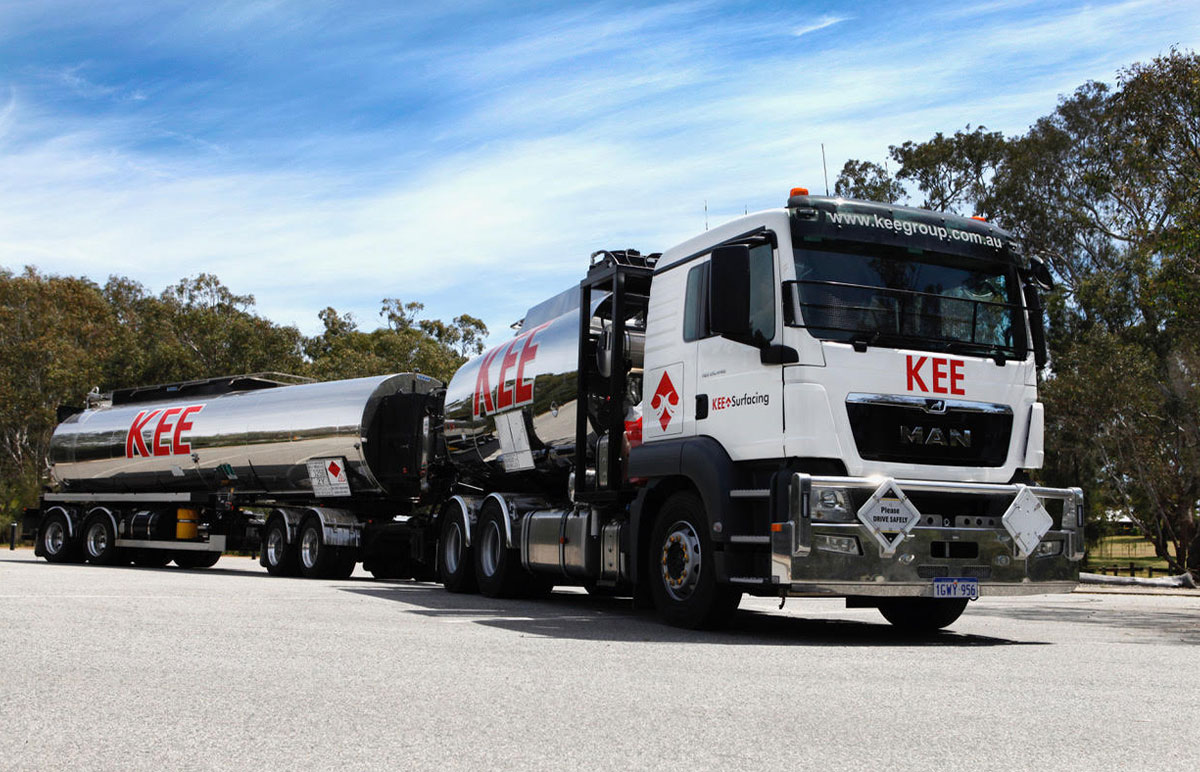
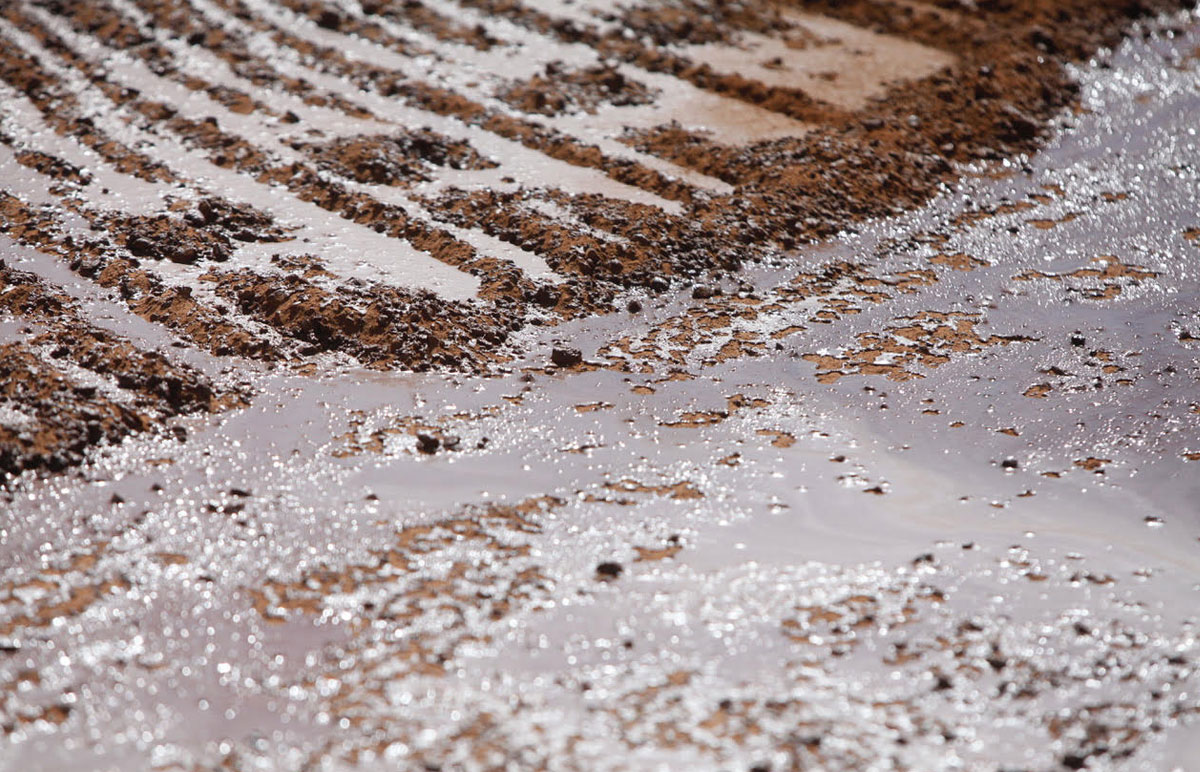
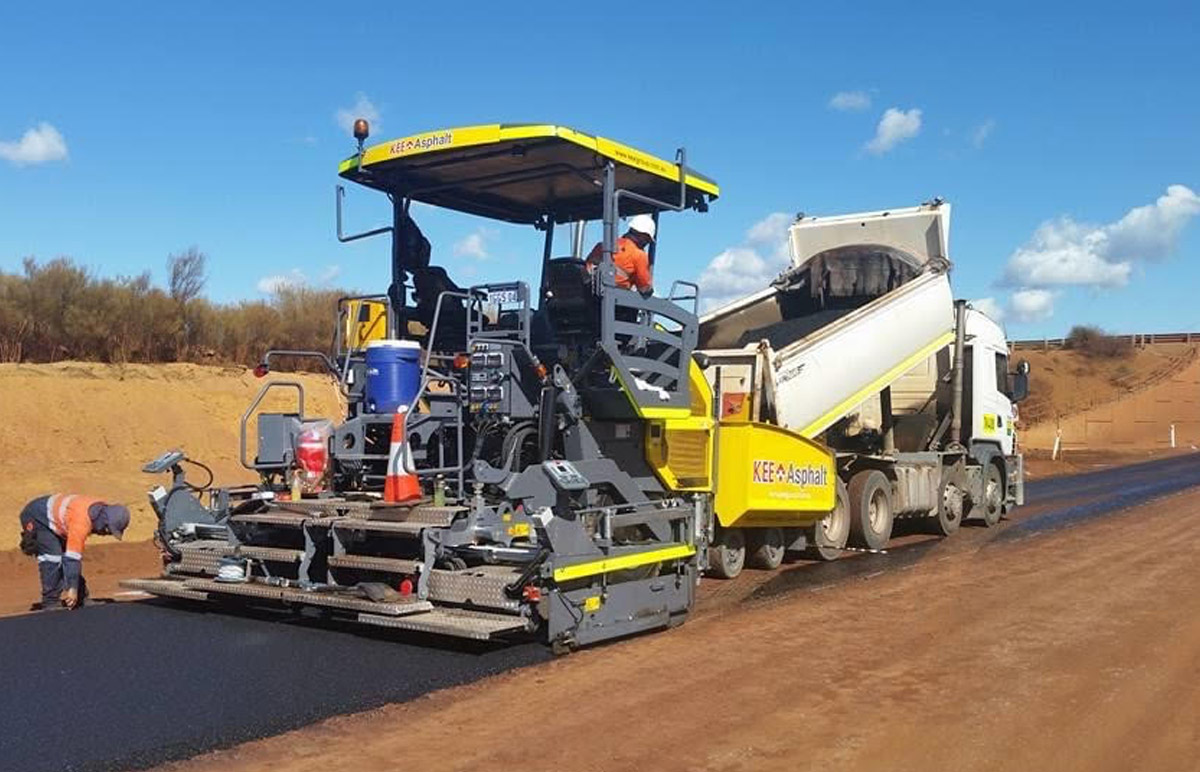
Asphalt is a mixture of aggregate, bitumen, and sand that is produced in a plant using heat. Bitumen is the liquid binder that is used to hold asphalt together. Think of bitumen as the glue used to stick two objects together or an egg to bind various ingredients together. When building a bitumen road, the surface will be sprayed with a layer of bitumen, creating a bitumen-sealed surface that’s covered with some form of aggregate. This is generally then repeated once more to create two layers of coating.
When asphalt is produced, it is spread and flattened onto a prepared surface, resulting in asphalt roads.

What Are the Pros and Cons of Bitumen and Asphalt?

When it comes to building roads, there are pros and cons to the two materials. To start, let us talk about the pros and cons of asphalt.

The pros of asphalt include a long lifespan of over twenty years, energy efficiency (as it minimises friction between the car’s wheel and the road), a smoother and more skid-resistance surface for safer drives, and reduced wear to the tyres. Noise is also minimised for more comfortable driving. However, the main cons of asphalt are that it is much more expensive to install than bitumen and requires a surface to be thoroughly prepared before application. Note that despite the higher upfront cost, asphalt is more cost-effective because of its increased lifespan.

The main pros of bitumen include a much cheaper road solution than asphalt and bitumen can easily be recycled for other purposes. Unfortunately, the pros end there. The cons begin with the fact that bitumen pavements are looser, making the driving experience much noisier and causing more wear to the tyres. Overall, bitumen roads are much less durable, and extreme weather can cause its surface to become slippery.

Conclusion

With all of that said, you might be wondering which option is better for you. That will entirely depend on your needs and budget, as both bitumen and asphalt have their uses that make them perfect for the job! If you need help deciding, don’t be afraid to reach out to a professional. Whether you are trying to build a driveway or thinking about resurfacing an area, a professional can assist you in understanding what your needs are. They will also consider your budget to develop a surfacing solution that meets your needs and expectations.

KEE Group is Australia’s civil and mining support service, offering hire, transport, fuel, and surfacing to meet various needs. KEE Group has several divisions under it’s surfacing banner. These include KEE Asphalt, KEE Profiling, KEE Spray-Seal, and KEE Basecourse Paving. If you are looking for professional technicians in Australia to help you plan out and lay quality asphalt or bitumen surfaces, work with us today!

IMAGE © Katharyn Quinn 2021

How to Choose Between Asphalt, Bitumen, or Spray Seal for Roads

surfacing and construction hire

Road surfacing is extremely important as it will help preserve the integrity and quality of roads. This is why you’ll want to do all you can to inform yourself about surfacing solutions. We thought it would be useful to put together an article discussing this subject. If this is something that you want to know more about, here’s a brief run-through of how to choose among the most popular surfacing solutions available today.

Hot-Mix Asphalt

Hot-mix asphalt is a mixture of aggregates such as gravel, sand, and asphalt cement. As the name suggests, hot-mix asphalt requires heating before it can be installed. Despite being heated to around 300 to 350 degrees, hot-mix asphalt cools quickly, making it a good material to use.

Once the hot-mix has been laid out, it will provide a smooth and durable finish to the base that it is laid on top of. This makes it ideal for road surfaces, driveways, and any area that experiences a high volume of car traffic.

Spray Seal

Unlike hot-mix asphalt, a spray seal is formed by applying a spray coat of bitumen over a base then laying an even spread of aggregate on top of the spray coat. A sprayed seal can be applied in a single coat or a double coat depending on the situation. The main thing you have to know about spray seals is that the base has to be prepared extremely well. Since it’s thinner than hot-mix, the spray seal will adhere to the shape of the base.

While spray seals aren’t nearly as strong as hot-mix asphalt, this doesn’t mean that it doesn’t come with its own advantages. Spray seals are incredibly flexible and aesthetically pleasing. To add to this, they are also water-proof and will prove to be a necessity if your area experiences a lot of rainfall.

Lastly, spray seals are considered to be the most affordable of all the surfacing solutions. This is why it’s ideal for treating larger areas. With that being said, it would be best to use it in low-traffic areas so that the volume of vehicles passing by won’t cause issues.

Bitumen

Bitumen has inbuilt advantages that originate from its manufacturing process. Bitumen can be used as raw material for road construction as well as a mix, making it one of the more flexible surfacing solutions.

The main advantage that bitumen has is its melting point. Bitumen can be melted down and returned back to its original state via a process called asphalt recycling. This is great as it can be used instead of being sent to a landfill.

While bitumen is usually black in colour, pigments can be added into bitumen to alter it to change the colour to your liking. Granted, you will have to add more chemical additives in order to arrive at the colour that you want.

Conclusion

Hopefully, this article will be of use when it comes to helping you choose between road surfacing options. Now, it’s important to understand that there is no one best option. Each of these surfacing solutions come with their own unique advantages. It would be in your best interest to gauge a situation and see which of these solutions would work best for the roads that you are trying to treat.

Every major road project in Perth has had KEE Surfacing as one of its partners. Our surfacing and construction hire workforce is made of bitumen and asphalt laying professionals, hand-picked for their skills, experience, and knowledge in delivering safe yet cutting-edge techniques. Contact us today for enquiries!

Enquire today

Get a Quote today!

Please fill in your details and a KEE Hire team member will reach out to you very soon.

Alternatively, you can contact us via the details below:

contactus@keegroup.com.au

+61 8 6401 8500

"*" indicates required fields

DD slash MM slash YYYY

Our people are our greatest asset

KEE Group are growing fast and we are often looking for the right people to help us make it happen. If you would like to join our team and share in the excitement, get in touch today!

Join The Team