Why the Construction Sector is Key to Economic Growth

construction equipment

The construction industry has always been one of the most vital sectors in any nation. It’s one of the pillars that drive modern society, and it has a profound impact on a country’s finances and economy. Almost everywhere one goes, there’s bound to be some products of construction—it’s a broad and all-encompassing field that continues to grow despite any setbacks, and it’s key to economic growth and change.

Since the COVID-19 pandemic hit, the effects have been highly disruptive. Many industries worldwide have experienced unprecedented changes, forcing numerous businesses to close or adapt to new models and operations. Demands have drastically transformed, and supply chains have been cut short because of new government regulations. As a result, the economy sustained some significant declines.

Although the construction industry is one of the sectors that experienced the drastic effects of the pandemic, it remains a significant contributor to a nation’s economic recovery and growth. It’s still one of the most sought-after industries that continuously generates revenue, making it a field that’s worthy of attention and investment.

Government Investments in the Construction Sector

The construction sector is one that many individuals, businesses, and governments rely on. However, the pandemic has posed a significant challenge. Because of the unpredictable nature of the economy in a crisis, the industry has seen markedly reduced investments from private businesses and individuals.

Fortunately, many governments invest more in infrastructure during crises. Maintenance schemes are especially widespread because of their simple and quick approval processes. Doing so entails some risks because of the uncertainty of the economic future, but it’s a highly effective way to kick-start the economy. It offsets the lack of spending from private businesses and households.

How the Construction Industry Contributes to Economic Growth

Investment in the construction industry is essential to the growth and recovery of the economy in many ways. It allows nations to develop infrastructure that supports many other businesses from various sectors, such as education, healthcare, and transportation. Without construction, these enterprises would face an even more significant decline.

Construction programmes also provide jobs to a significant chunk of the working population because of their labour-intensive nature. It can readily absorb workers from different industries, and governments can focus on areas where the recession is most prevalent. Governments can create rural and social infrastructure in places with high unemployment rates or low wage costs to enhance economic activity and growth.

Other economic sectors can also benefit from the construction industry’s activity because of the “trickle-down” effect that the programmes promote. Many local businesses will contribute to the supply chain, and others can cater to the workers involved in the projects. Transportation, accommodation, food, raw materials, and other enterprises will have a necessary boost in growth.

The Takeaway

The construction industry is one of the most vital pillars of modern society, as its activity is essential in supporting many other business sectors. Its applications are endless for individuals, private companies, and governments alike, and it’s key to helping the economy grow and thrive despite unprecedented changes.

If you’re looking for construction equipment hire in Perth, Albany, and Port Hedland, KEE Group is the place to call. We’ll provide you with advanced and highly reliable machinery to help you with your projects. Get in touch with us today!

IMAGE © Katharyn Quinn 2021

3 Exciting Innovations in the Heavy Plant Machinery Space

machinery hire in Albany

The world is quickly transforming and developing, and with that, heavy machinery and equipment need to keep up with the changes. With all these advancements in electromobility, machinery, and telematics, there’s no denying that this will change the game in the construction industry, providing many benefits to companies and clients worldwide.

Many are aware of the technological advancements in the digital space, but our physical infrastructure and construction developments deserve the spotlight, too, and for a good reason.

Since the machinery hire industry will continue to grow along with tech progress, it’s only right to explore the different technology trends pushing innovation in the heavy plant machinery space. Let’s take a look!

Trend #1: The Rise of Autonomous Machinery

By the end of 2025, the self-driving vehicle market is expected to be worth about USD1.6 billion. With this growth, you’ll find an overwhelming change in the industry’s productivity and efficiency, making autonomous machinery an unbeatable trend.

When a company integrates autonomous vehicles, workflows will improve, allowing these technologies to complete mundane tasks. This will allow employees to focus on value-added jobs instead of day-to-day issues that could take up too much of their time.

With that said, autonomous vehicles can also help improve the well-being of employees, since it promotes stress relief and safety in the work area.

Trend #2: Pushing Electromobility to Benefit the Environment

Another innovation to note is that, since autonomous vehicles are on the rise, the advanced equipment will be powered by electric motors, which provides sustainability for businesses.

With electromobility, equipment manufacturers have addressed years of sustainability efforts, finally realising lower-emission solutions, such as reduced fuel consumption and the development of telematics systems, which decrease fuel usage and idle time.

Continued research and development allow manufacturers to produce electric motors with batteries and computers integrated into machinery to help them work efficiently. Since this knowledge is shared across industries, electric motors have become more accessible, cheaper, and easier to make without compromising their powerful benefits.

But besides sustainability, electromobility also requires less maintenance than traditional motors, allowing companies to cut down expenses. Not to mention, with fast-charging options, these vehicles can reach peak charge within a small window.

Trend #3: Digitally Connected Machines, Telematics, and Virtual Change

We all know that we’re living in the digital age where almost everything is digitised. With that said, there’s no denying that the heavy plant machinery space has also found unexpected growth in this landscape.

Hundreds of multiple construction companies are beginning to embrace connected construction equipment and telematics. Because of this, it’s starting to become the norm at job sites, which encourages more innovation in this field.

By connecting equipment through telematics systems, you can merge GPS technology and onboard diagnostics, monitoring sensors, reports, and logs to help streamline and improve the performance and operations of construction equipment.

With all of this, telematics systems serve as a singular hub where data and information can be accessed, bringing in improvements in productivity and service.

The Bottom Line: There are No Stopping Technological Innovations in the Heavy Plant Machinery Industry

While it may take some time for most machinery tech innovations to become a norm, it’s quite encouraging to see that many industries are slowly adapting to the change and incorporating the different technological advancements we mentioned above.

Once advanced equipment becomes the norm, the construction industry will continue to rise, boosting economic growth, and ultimately benefiting society.

How Can We Help You?

If you’re looking to integrate advanced equipment into your projects, it’s best to call KEE Group.

KEE Group is Australia’s most effective and unique civil and mining support service, providing hires, surfacing, transport, and fuel services for any development project. Looking for machinery hire in Albany? Get in touch with us today!

IMAGE © Forbes

Is There Such A Thing As “Going Green” in Construction?

hire equipment in Perth

Words like “green construction” and “sustainability” are emblazoned over the headlines alongside stories of wildfires, climate change, and city floods. Buzzwords like “green” and “sustainable” make us feel good, but they are frequently misunderstood in construction.

Green is a developing trend in the industry and worldwide, as the movement to protect our planet intensifies into a desperate frenzy. To understand how to operate in an environmentally friendly manner, it is necessary first to grasp what going “green” means for the industry.

What is Green Construction?

Green construction is built on the principles of sustainability and low-impact operations. The wise use of materials is part of every building’s life cycle stage, from material procurement and construction through operation and destruction. Green building incorporates:

  • Specialised designs and materials that have a low environmental impact
  • Environmentally friendly processes aim to save as much energy and water as feasible
  • Utilization of recycled or renewable resources
  • Processes that use fewer resources

The desire to save the world is not the sole motive driving the green building movement. Durability, cost savings, and efficiency are compelling reasons why sustainable practices push many businesses to the green corner.

Other Sustainable Construction Strategies Used Today

The scope of green construction is virtually limitless. Contractors have many alternatives, ranging from the Internet of Things to translucent glass-like material made of wood. Green vegetation-based roofs are frequently chosen for their aesthetic value as well as their sustainability.

Greenery makes people feel welcome and at ease in the places where they work or reside. The presence of plants and flowers improves the curb appeal of a structure. Furthermore, filling structures with flora may help lower indoor temperatures and offer insulation, lowering energy expenses.

Contractors can use the modular building approach to build off-site structure and then transfer it to the final construction site. They finish a project in less time and with fewer resources while producing the same high-quality results.

When the building has served its purpose, the firm might deconstruct it and repurpose it for another use. Furthermore, constructors operate at a better efficiency since they are not affected by weather delays or other accidents.

Read our article on the future of the Australian construction market to learn more.

The Future of Green Building in Australia

Green technological advancements over the next 5-10 years will shape the future of green construction. The emphasis must be on making significant changes in how we design and develop buildings for the future. Air cleaning products, for example, will make our interior and outdoor surroundings healthier.

Microgrids, net-zero buildings and electricity-generating windows will help lessen our reliance on coal and other carbon-emitting energy sources. Smart glass will help make surroundings more pleasant and less expensive to heat and cool, therefore saving energy and money.

Make a Statement With Green Construction Practices

In Australia, the Green Star rating (given by the Green Building Council Australia (GBCA)) is a voluntary and globally recognised grading system that conveys the quality of sustainable building and community design, construction and operation. It seeks to raise environmental awareness in the building sector and foster healthy market competitiveness that benefits everyone.

Conclusion

Green construction blends recycling, efficiency, sustainability and smart technology to create high-quality structures that are long-lasting and have a minimal environmental impact. Green building will become the standard method of construction for homes and other structures in the future.

Get your green ball rolling and hire equipment in Perth, Albany, and Port Hedland for your sustainable projects. The KEE Group stands behind significant climate issues and proactively looks for ways to minimize our impact wherever we operate. This is why we are more than prepared to help you achieve green construction with our top-quality machinery. Get in touch with us today to get what you need!

IMAGE © Katharyn Quinn 2021

Surface Trends Beyond 2021

construction hire

While scrap heaps containing millions of wasted tyres might not seem like a hazard to anyone, they actually can cause severe damage to the environment. Such was the case in 1999 when a lightning storm ignited tyres in a Californian tyre recycling facility. The “Westly Tyre Fire” created an enormous fire and brought to attention the dangers of rubber scrap heaps, and as such, efforts were placed to find a use for scrap tyres.

Today, many companies have focused on putting old rubber tyres to use, one of the most prominent being recycling them for road surfacing. whereby rubber is combined with pavement materials to create the roads we know today. While not all roads do this, a significant proportion does.

That being said, let’s talk more about surface trends of 2021 and beyond to see what we can expect from the use of surfaces and rubber:

Surface Trends Beyond 2021

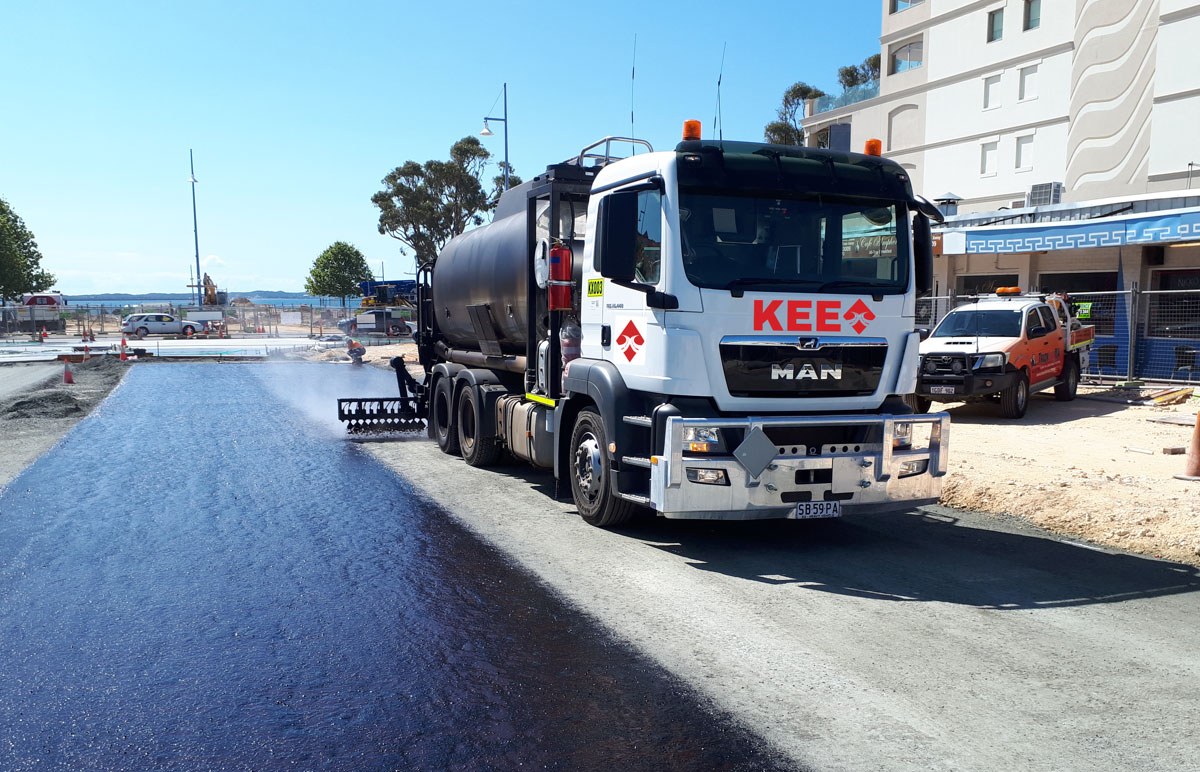
Many roads today are made of what is known as asphalt concrete. This type of material is made up of rocky aggregates and a black binder that acts as the glue to keep the road together. It is in these binders that utilizes a blend of complex hydrocarbons from petroleum that has a significant impact on the environment despite how little it is used. This doesn’t include the process of acquiring, transporting, and refining the binder, all of which emit large amounts of greenhouse gases. Even during the paving process, more greenhouse gases are produced as the binders need to be heated with a mix of aggregate. Unfortunately, such a binder doesn’t last too long, either. Over time, the binder stiffens, leading to cracks.

With that in mind, how does one go about fixing the problem of an environmentally harmful binder that quickly oxidizes and causes the road to crack? This is where tyres come in.

Tyres are made out of synthetic and natural rubbers which are heated up with various auxiliary compounds to create a cross-linked structure. This composition is what makes the tyres so hardy, and that’s why they last so long in landfills. Fortunately, though, they do not have to stay there. Upon discovering ways to turn tyres into crumb rubber, the addition of such rubber into asphalt binders has improved the surface’s performance significantly. However, there is one drawback here. The drawback of mixing rubber with asphalt is that the temperatures needed to make the mixture viscous enough to work with, need to be much higher. Fortunately, warm mix technologies that utilize foam water have allowed such temperatures to drop by a whopping 40 Celcius, leading to less energy spent and, as a result, much less greenhouse gas produced. That said, further research is progressing to create cold mixtures, but they’re still used as patching material rather than all-out road solutions because their performance isn’t up there.

Conclusion

Apart from mixing crumb rubber with binders to improve the performance and environmental-friendliness of roads, many other experimental trends are being generated to take it much further. One idea is to use Reclaimed Asphalt Pavement (RAP), using old roads to build new ones. However, while many of these implementations are still in their infancy, it is good to see companies looking for new materials.

Seeing how manufacturers are working hard to find more environmentally-friendly solutions that do not sacrifice performance, one can assume that the world is only thanking us in our attempt to live greener. With that in mind, we believe that the future trends will revolve around being environmentally friendly, and these apply to roads and more. KEE Surfacing has been using both crumb rubber and RAP over many years and is proud to lead the way for WA’s roads to be built using more environmentally friendly materials. With KEE Asphalt, KEE Profiling, KEE Spray Seal and KEE Basecourse Paving divisions, KEE Surfacing has you covered!

KEE Group is Australia’s civil and mining support service, offering services covering hire, surfacing, transport, and fuel. If you are looking for a construction hire that offers surfacing services that you can rely on, contact us today!

IMAGE © Katharyn Quinn 2021

Decreasing the Environmental Impact of Construction

construction hire

The construction sector is one of the biggest industries globally, making quite an impact on society. Many jobs are created, and it provides an opportunity to urbanise and advance areas.
We cannot ignore, however, that construction can have certain devastating effects too. The environmental impact of construction companies is always a point of discussion, and rightly so. Keep reading to learn more about it and how sustainable construction responds to decrease the environmental impact made.

What Is The Environmental Impact?

The construction industry has many different practices in place, often at the expense of the environment that surrounds it and as a whole. For example, overconsumption of fuel when toiling away at construction sites can be quite a hazard. How much is used can also generate greenhouse gases that worsen our chances against the impending disasters of climate change.

Construction companies with bad and outdated practices also add to waste generation, where a lot of unusable debris is just chucked off to foreign landfills, or burned in incinerators to produce plenty of smoke to pollute the air further. If it doesn’t go to the landfills, the waste could go straight into the ocean, which can destroy underwater life and coral reefs.

What Exactly Is Sustainable Construction?

Sustainable construction is the responsibility of construction companies everywhere. Modern technological advances have paved the way for compromise, providing better alternatives that can greatly lessen the ecological impact of the industry on the environment while continuing to function, operate and contribute to society.

Granted, these principles and techniques may be foreign at first. Fostering a more conscious and healthy environment can take practice. Starting and sustaining it for the long term can greatly assist in improving the Earth’s condition and healing from all the impact made beforehand.

How Can Construction Companies Contribute?

Here are several ways of how construction can contribute to decreasing its environmental impact:

  • Reduce Fuel Use. Utilising fewer fossil fuels will result in lesser air pollution. Finding alternative fuel sources that are better for the environment can also help too.
  • Use Sustainable Materials. Too much material can be generated as a result of overproduction for construction. Consider using renewable and recycled resources.
  • Practice Erosion Control. Ecosystems and landscapes are always put at risk when construction projects take place. Implement erosion control measures to compensate.
  • Avoid Dumping Contaminants. Do not unethically dump any contaminants into landfills and waters. There are safer ways of disposing of them if chemical use is necessary.
  • Quicken Timelines. Construction that takes too long can impact the environment too much because of the project timeline. Stick to a schedule and shorten it when possible.
  • Utilize Alternative Energy And Plumbing. There are different energy sources and plumbing techniques available now that take advantage of the environment rather than damage it. Be sure to look into solar and wind energy use.
  • Promote And Partner With Other Green Businesses. Many construction companies strive to go green already to reduce the impact. One way of participating in the cause is to provide support to these businesses with promotions and partnerships.

Conclusion

It can be a difficult road to reach zero environmental impact. However, the construction industry should move as a whole towards this goal, inching closer to it little by little. Before you know it, the planet’s healing is in motion while business continues.

Looking for construction hire? KEE Group is Australia’s most effective civil and mining support service, offering construction, surfacing, transport and fuel services. Contact us today.

IMAGE © Katharyn Quinn 2021

What is Next for the Oil Industry?

hire equipment perth

Several developments are poised to reshape the oil sector. Within the next 20 years, demand is anticipated to peak and fall, resulting in industry convergence and a weakening of existing companies’ competitive advantage. The future oil sector will also see both energy and non-energy players, implying that oil firms are attempting to adjust their business methods to the new era.

The primary question is how the future ecosystem will look and if existing companies will use their core competencies to survive and even gain from these new challenges. What will the future oil corporations look like?

The Need To Reinvent the Industry

Despite average oil prices of more than $70 per barrel over the previous decade, free cash flow from core activities has been inadequate to keep shareholder returns above the cost of capital. Since the depths of the 2008 financial crisis, the leverage ratio of total debt to total liquidity has more than quadrupled, and the industry’s share of the S&P 500 has been slashed in half over the previous decade.

Despite these warning indications, oil and gas corporations continue to play a critical role in the energy future, notably in providing safe, cheap and sustainable energy to over a billion people. However, oil and gas will no longer be the uncontested energy leader, as alternative sources will soon be taking the lead.

Where the Industry Is Headed

The World Economic Forum’s Oil and Gas community is joining forces to investigate projects that encourage collaboration between oil and gas industry businesses and their ecosystem.

Among the key initiatives are:

1. Establishment of Global Networks and Hubs

The O&G industry will seek to establish a global hub network to allow offshore logistics, warehousing and surplus inventory pooling, resulting in $14 billion yearly savings from increased infrastructure usage and inventory reduction.

2. Standardisation of Equipment Specifications

Standardisation of equipment specifications for bulk material and packaging procurement is expected to result in a 10 per cent to 20 per cent reduction in capital expenditure on equipment and a 40 per cent reduction in schedule compression, among other significant benefits.

3. Diversification of Energy Sources

Some oil and gas firms will extend their focus to include hydrocarbons and electrons, emphasising end-user demands.

4. Streamlining of Data Sets and Digital Collaboration Platforms

This initiative aims to develop common standards for data architecture and APIs throughout the oil and gas sector, allowing data sharing and establishing the groundwork for digitalisation and data-driven decision making, which will accelerate the timelines of ground projects.

Conclusion

The oil and gas sector must confront several difficulties and prepare for an increasingly complicated and uncertain future. The capacity of the industry’s executives to detect essential signals and respond decisively is vital to the industry’s success.

One critical option is to explore collaborative projects on a local, regional and global scale. Working with peers in the industry and suppliers, as well as encouraging suppliers to join forces and collaborate in strict accordance with competition law and antitrust standards, the industry may eliminate waste, increase efficiency, cut breakeven costs and minimise its carbon footprint.

KEE Group is Australia’s most effective and unique civil and mining support service. We provide top-grade machinery for your projects at an affordable cost. If you’re looking to hire equipment in Perth, Albany and Port Hedland, don’t hesitate to contact us today.

IMAGE © Katharyn Quinn 2021

Enquire today

Get a Quote today!

Please fill in your details and a KEE Hire team member will reach out to you very soon.

Alternatively, you can contact us via the details below:

contactus@keegroup.com.au

+61 8 6401 8500

"*" indicates required fields

DD slash MM slash YYYY

Our people are our greatest asset

KEE Group are growing fast and we are often looking for the right people to help us make it happen. If you would like to join our team and share in the excitement, get in touch today!

Join The Team